AI Leaders Agree on Urgent Need to Regulate Advanced AI Models
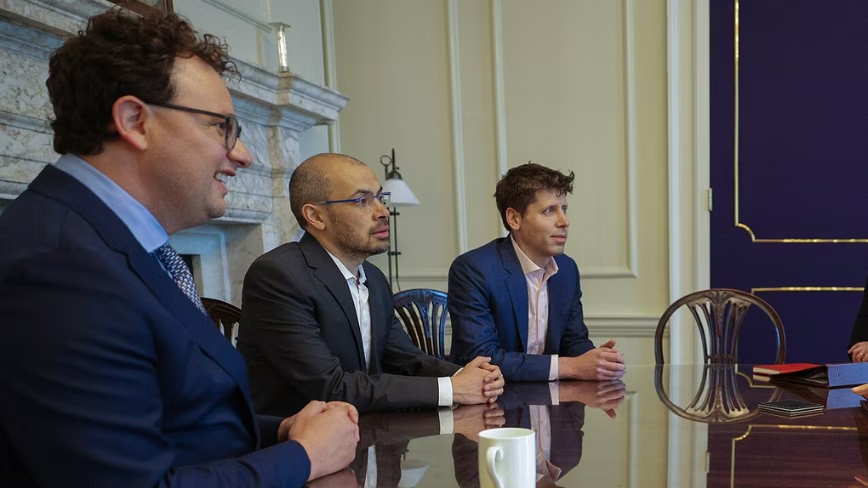
Leaders from three of the world's most prominent AI development companies have reached a rare consensus on the urgent need for regulation of advanced artificial intelligence. Demis Hassabis of Google DeepMind, Sam Altman of OpenAI, and Dario Amodei of Anthropic, along with other executives from their respective organizations, have each published memos outlining their views on how the most powerful AI models should be governed. This convergence of opinion from key players, who often hold differing perspectives on AI development, highlights a shared concern regarding the potential risks associated with frontier AI. The memos, reported by Axios, suggest a growing acknowledgment within the industry that proactive regulatory measures are necessary to ensure the safe and responsible advancement of this transformative technology. The specific proposals and timelines for regulation are detailed within these individual publications, indicating a concerted effort to address potential societal impacts.
AI's leading developers are signaling a collective recognition of potential risks inherent in rapidly advancing frontier models. This industry-led call for regulation, rather than solely government imposition, suggests a strategic approach to shaping future policy. It may reflect an understanding that proactive engagement can influence regulatory frameworks to be more conducive to innovation, while also preempting potentially more restrictive external mandates. The alignment across competitors like Google DeepMind, OpenAI, and Anthropic indicates a shared perception of systemic challenges that transcend individual corporate interests, potentially driven by both genuine safety concerns and the desire to establish industry standards. This dynamic could lead to a period where technological development is increasingly intertwined with policy considerations, shaping the trajectory of AI integration into society over the next decade.
AI-generated to prompt reflection — not editorial opinion, not advice, not a statement of fact. How this works.