AI Masters Human Voice and Vision, Blurring Lines Between Real and Synthetic
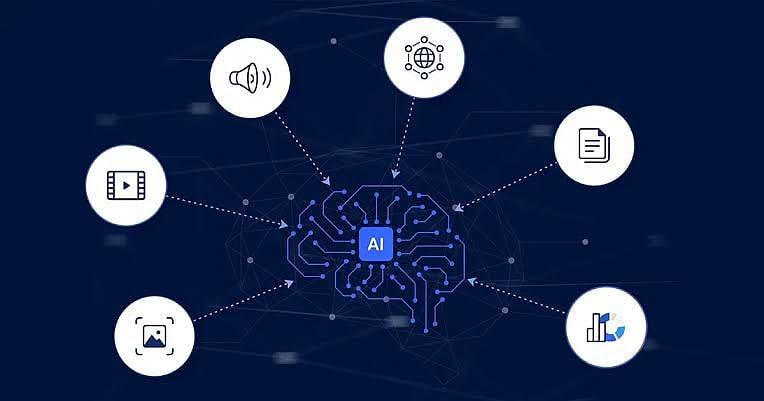
Artificial intelligence is rapidly advancing beyond text generation, now capable of understanding and interacting through multiple modalities including sight and sound. Recent AI models, such as OpenAI's 'o1' series and Google's Gemini Live, are becoming fully multi-modal, allowing them to process and respond to visual, auditory, and textual inputs simultaneously. This means an AI can watch a live video feed, listen to a spoken question, and then provide a spoken answer in real-time, mimicking human conversation with natural intonation and even laughter. A key breakthrough is real-time voice cloning, which can replicate a person's voice from just 3-5 seconds of audio. This technology analyzes pitch, tone, speaking speed, and regional accents to create a near-perfect replica. While this has significant potential for aiding individuals who have lost their voice due to illness or surgery, enabling them to communicate in their own digital voice, it also presents serious risks. The ability to clone voices so easily facilitates the creation of 'deepfake audio,' where malicious actors can impersonate individuals to perpetrate scams, such as requesting money under false pretenses. To combat this, researchers are developing AI detectors and digital watermarks to distinguish between authentic human voices and AI-generated clones. Despite these advancements, the article emphasizes that while AI can perfectly mimic human speech and understanding, the capacity for genuine emotion, ethical judgment, and discerning truth remains uniquely human.
The rapid development of multi-modal AI, particularly in real-time voice cloning and visual comprehension, signifies a profound shift in human-computer interaction. While offering unprecedented opportunities for personalized education and accessibility, such as restoring a digital voice to those who have lost it, the technology's dual-use potential demands robust ethical frameworks and detection mechanisms. The ease with which synthetic voices can be generated raises significant concerns regarding misinformation, fraud, and the erosion of trust in digital communications. Future societal integration will require a concerted effort to balance technological innovation with safeguards that preserve authenticity and protect individuals from sophisticated digital impersonation, fostering a landscape where AI serves as a tool for augmentation rather than deception.
AI-generated to prompt reflection — not editorial opinion, not advice, not a statement of fact. How this works.