AI Model Accelerates Simulation of Heavy Element Formation in Neutron Star Mergers
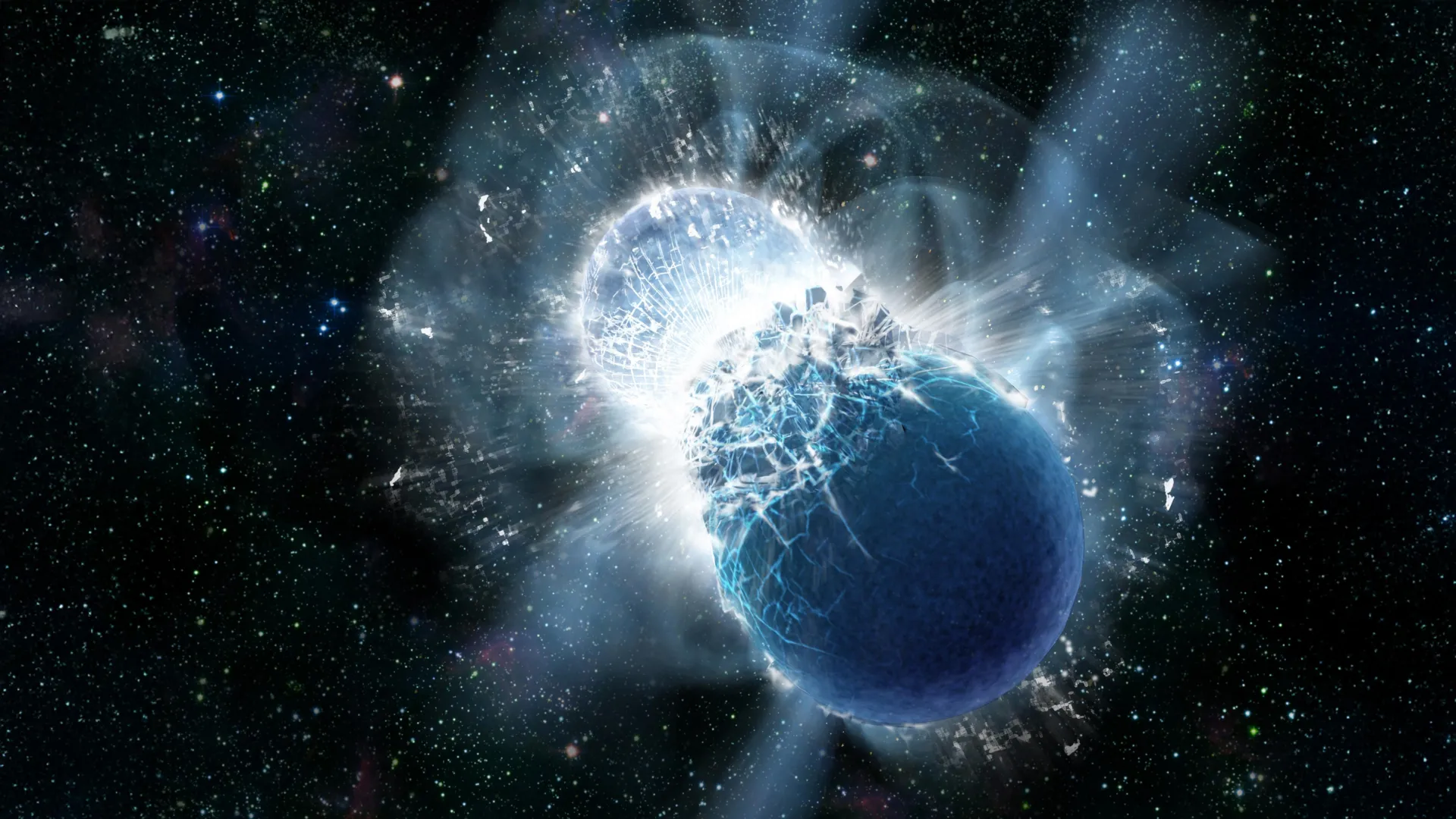
Scientists have developed a novel AI-powered simulation that significantly speeds up the modeling process for how neutron star mergers create many of the universe's heaviest elements. This advanced computational tool is expected to enhance the accuracy of predictions concerning these energetic cosmic events. Furthermore, the AI model aims to bridge the gap between astronomical observations and terrestrial laboratory experiments. By providing a more efficient way to simulate these complex astrophysical phenomena, researchers can gain deeper insights into nucleosynthesis, the process by which new atomic nuclei are formed. This breakthrough could lead to a more comprehensive understanding of the origins of elements heavier than iron, such as gold and platinum. The improved predictive capabilities may also aid astronomers in interpreting data from telescopes and other observational instruments, correlating them with theoretical models and experimental results.
AI's application in astrophysics, as demonstrated by this new simulation model, offers a powerful pathway to accelerate complex scientific inquiry. By reducing computational time for simulating neutron star mergers, researchers can explore a wider parameter space and refine theoretical models against observational data more rapidly. This efficiency gain is crucial for advancing our understanding of cosmic element formation, a fundamental question in science. The ability to better connect space-based observations with Earth-based experiments highlights the potential for AI to foster interdisciplinary collaboration and innovation. As AI models become more sophisticated, they may unlock new predictive capabilities, enabling scientists to anticipate phenomena and design experiments with greater precision, thereby deepening our grasp of the universe's fundamental processes.
AI-generated to prompt reflection — not editorial opinion, not advice, not a statement of fact. How this works.