AI Photo Trick: Understand Any Home Appliance Instantly
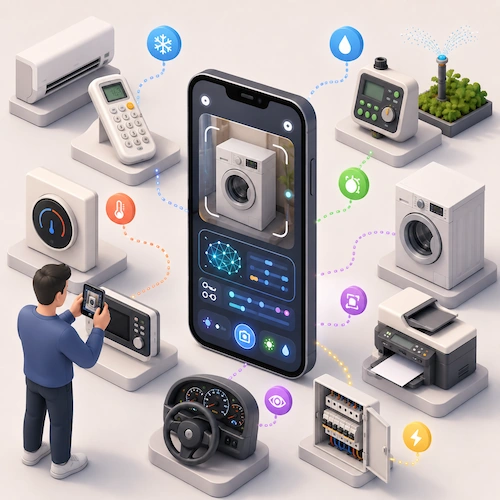
A recent broadcast on RNE's 'Cruce de cables' program highlighted a practical application of artificial intelligence: using a simple photograph to understand how any home appliance functions. This 'superpower' allows users to identify and operate unfamiliar devices, such as complex air conditioning remotes, irrigation timers, or heating thermostats, without sifting through lengthy manuals. The method involves taking a picture of the appliance and asking an AI model, like ChatGPT or Gemini, for an explanation and operating instructions. The AI doesn't always need to recognize the exact model; it can often deduce functionality from the arrangement and icons of buttons and controls. This technique is particularly effective for common household items including climate control systems, kitchen appliances, car dashboard controls, and even office equipment like printers and copiers. Users can ask specific questions, such as how to set a particular temperature or schedule an irrigation system, receiving tailored answers that bypass the need to search through extensive documentation. While not infallible, especially with rare models or unusual configurations, this AI-powered approach significantly streamlines troubleshooting and daily operation of various devices, offering a tangible benefit over frustrating online manual searches. It represents a highly useful, albeit understated, application of AI for everyday problem-solving.
AI's capacity to interpret visual data and access vast knowledge bases offers a practical solution to common user interface challenges. By leveraging image recognition and natural language processing, AI models can demystify complex controls on everyday objects, reducing user frustration and the time spent searching for information. This application highlights a shift from abstract AI capabilities to tangible, everyday utility, potentially democratizing access to technical knowledge. As AI becomes more integrated into devices, the expectation for intuitive operation and immediate support will grow, prompting manufacturers to consider more user-centric design and data accessibility. The long-term implication is a more efficient and less intimidating technological environment for consumers.
AI-generated to prompt reflection — not editorial opinion, not advice, not a statement of fact. How this works.