AI-powered shaver reviewed: Philips i9000 vs. basic model
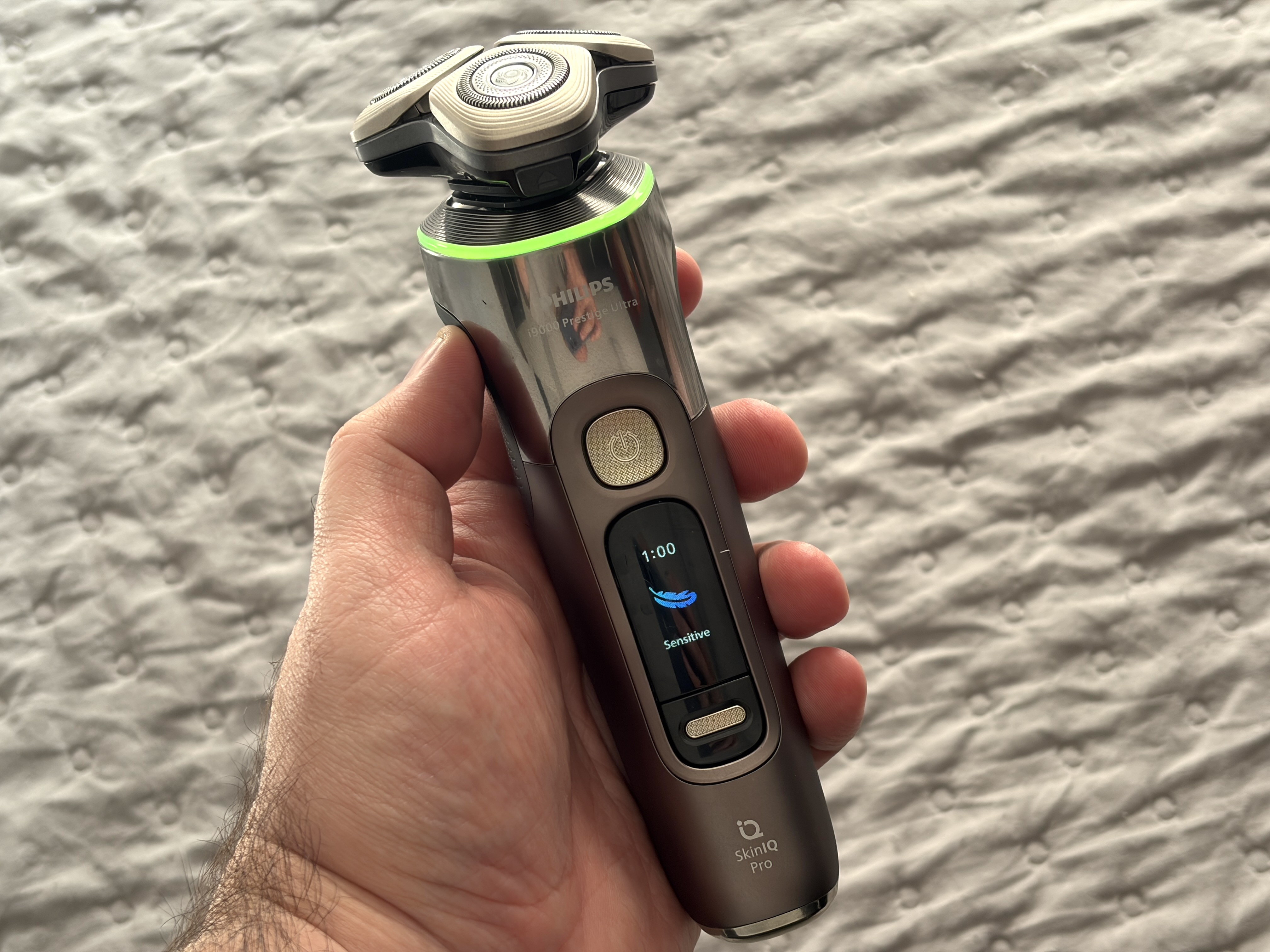
A review compares the Philips i9000 Prestige Ultra shaver, featuring artificial intelligence, with a more basic Philips Series 5000 model. The i9000 utilizes sensors and lights to guide users towards an optimal two-minute shave, aiming to prevent skin irritation. It also connects to a mobile app for enhanced control. Priced between R$1,800 and R$2,500 in July, the i9000 is positioned as a premium device, with its maximum cost equivalent to approximately 25 visits to a local barbershop in São Paulo. The core technological difference lies in the i9000's sensors, which read beard density hundreds of times per second and automatically adjust power, alongside pressure and movement sensors. Indicator lights signal correct technique, with purple indicating excessive force. The basic Series 5000 model relies on conventional blades without such advanced adjustments. While the i9000 provides a close shave, achieving 0.08 mm below skin level and keeping the face smooth throughout the day, the review notes that some residue may remain on denser beards. The device performed well with beards up to three days old, causing minimal irritation, especially when used with shaving gel in the shower. However, it struggled with a seven-day beard, requiring manual finishing. The reviewer concludes that the Philips i9000 is a worthwhile investment for those prioritizing a consistently clean appearance, particularly with less dense beards, but its high cost may not be justified compared to simpler, less technologically advanced models.
The integration of AI into personal grooming devices like the Philips i9000 Prestige Ultra highlights a trend toward hyper-personalization and data-driven user experiences. While the technology aims to optimize shaving efficiency and reduce irritation through sensor feedback, its substantial price premium raises questions about the incremental value proposition for the average consumer. The system's reliance on sensors and an app suggests a potential for technological obsolescence and a dependency on continuous software support. Future iterations may need to balance advanced features with affordability and user-friendliness, considering the long-term implications of smart devices in everyday routines and the potential for data privacy concerns related to usage patterns.
AI-generated to prompt reflection — not editorial opinion, not advice, not a statement of fact. How this works.