AI-Powered Smartphones Debut, Promising a New Era of Voice-Controlled Assistants
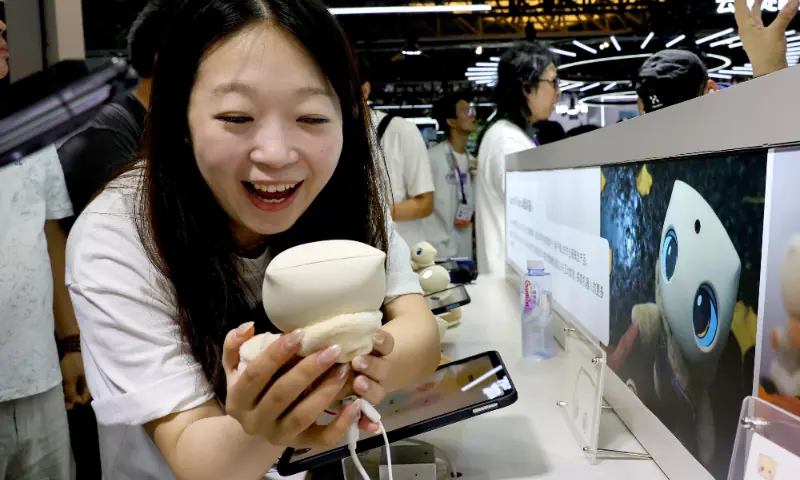
Technology firms are rapidly developing advanced smartphones that integrate artificial intelligence to perform tasks like ordering food and composing messages via voice commands. This evolution towards "AI agent" smartphones could revolutionize user interaction by potentially reducing reliance on individual apps. Several companies showcased these AI-centric devices at the World Artificial Intelligence Conference in Shanghai. Nubia presented its NaviX Ultra, powered by ByteDance's Doubao AI chatbot, signaling a new phase for AI agent smartphones. A limited release of a prototype "Doubao Phone" in December demonstrated capabilities such as voice-activated ordering and price comparison, but faced immediate restrictions from major platforms like Alibaba, Tencent, and JD.com, which limited the AI's access to their services. ByteDance subsequently adjusted the tool's functionality, especially concerning payments. Industry experts note that gaining broad access to third-party apps is a significant hurdle, as platforms aim to maintain direct user engagement. Honour also displayed its "Robot Phone" with an interactive camera and AI capabilities co-developed with Alibaba, set for release later this year. Shanghai-based startup StepFun unveiled its "AI agent-native smartphone," the STEPX Neo, highlighting partnerships with platforms like Alipay and Didi for integrated services. Beyond China, companies like Google are embedding advanced AI into smartphones, and US startup Brain Technologies launched its "Natural AI Phone" in Japan. While the technology is still developing, with early versions exhibiting inconsistent performance, analysts predict a fundamental shift in the digital economy and business models within the next decade, potentially rendering current app usage obsolete.
The emergence of AI agent smartphones represents a significant technological shift, aiming to streamline user experience by centralizing control through voice-activated agents. This development challenges the established app-centric digital economy, where platform owners maintain direct relationships with users. The current limitations, such as restricted access to third-party services, highlight a fundamental tension between the desire for integrated AI functionality and the proprietary interests of major tech platforms. As AI capabilities advance, the industry faces the complex task of establishing new governance models and data-sharing frameworks that balance user convenience with platform autonomy and security. The long-term implications suggest a potential restructuring of digital services, moving towards more intuitive, agent-driven interactions that could redefine how consumers engage with technology and how businesses operate.
AI-generated to prompt reflection — not editorial opinion, not advice, not a statement of fact. How this works.