AI Robots Now Available for Home Chores in China at Low Hourly Rates
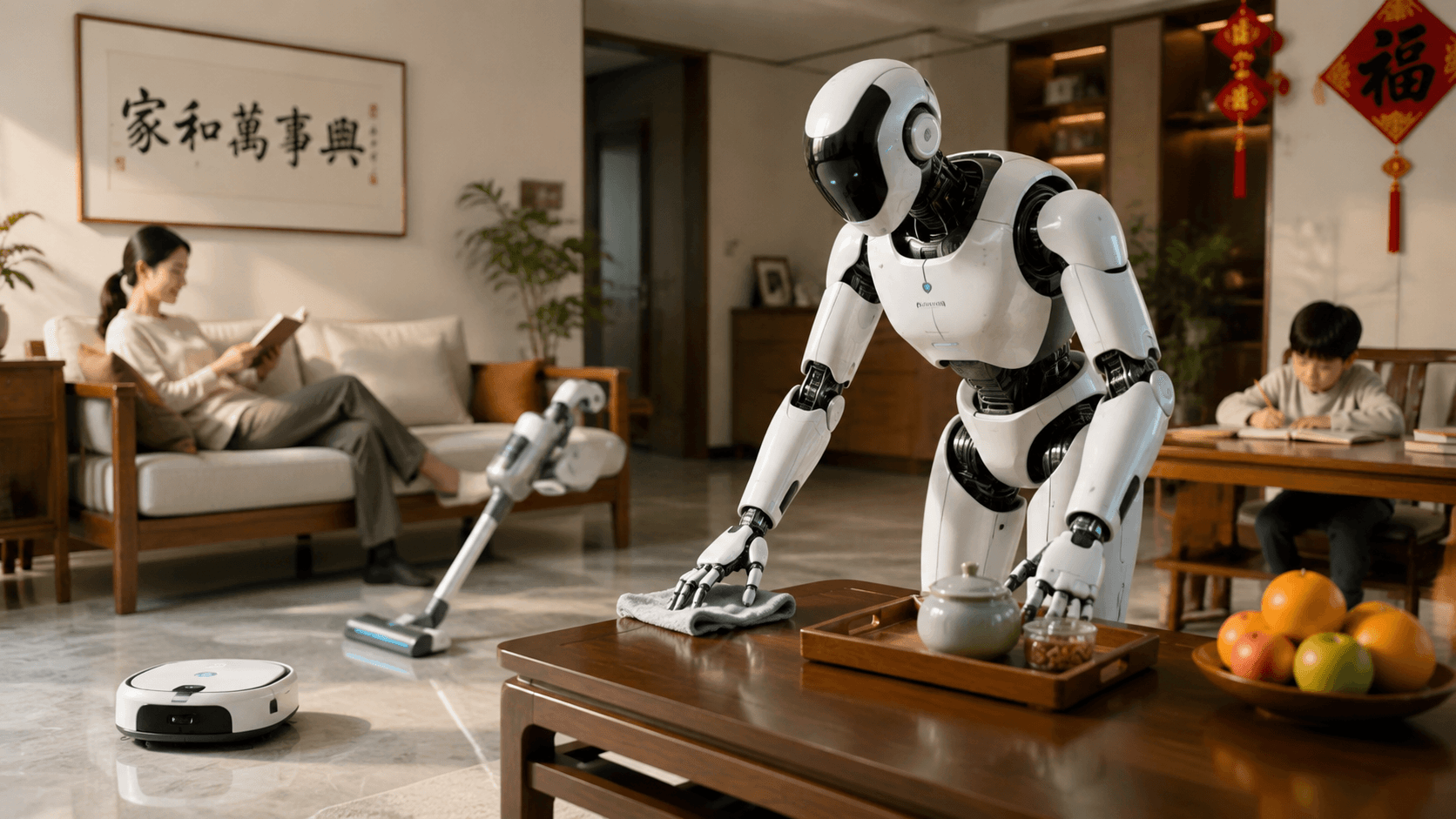
Embodied AI robots are entering Chinese homes, offering services for household chores at competitive prices. For as little as 74 yuan, consumers can hire these robots for a three-hour period. This development has ignited a discussion regarding the actual return on investment for the billions of dollars poured into embodied AI technology by various companies. The availability of these robots at such rates raises questions about their practical utility and economic viability for everyday domestic tasks. As the technology becomes more accessible, it prompts a re-evaluation of the value proposition of advanced robotics in the consumer market. The low entry cost suggests a potential shift in how household labor might be managed in the future. This move by Chinese companies signifies a tangible step towards integrating sophisticated AI into daily life, moving beyond industrial or specialized applications. The affordability could accelerate adoption rates, making embodied AI a more common sight in residential settings. The debate centers on whether this pricing reflects true value or is a strategy to gain market share.
The introduction of embodied AI robots for domestic chores at accessible price points like 74 yuan for three hours in China signals a significant market penetration strategy. This pricing model appears designed to drive adoption and gather real-world usage data, potentially validating massive R&D investments. The key challenge will be balancing cost-effectiveness with the robots' actual utility and reliability in diverse home environments. Over the next decade, as AI capabilities advance and manufacturing scales, such services could redefine domestic labor markets, raising questions about job displacement and the evolving human-robot relationship. The long-term success will hinge on demonstrating tangible value beyond novelty, ensuring these robots can consistently perform tasks efficiently and safely, thereby justifying ongoing consumer and investor confidence in the embodied AI sector.
AI-generated to prompt reflection — not editorial opinion, not advice, not a statement of fact. How this works.