AI's Real Value Lies in Business Integration, Not Just Technology, Says Senbo Tech Chairman
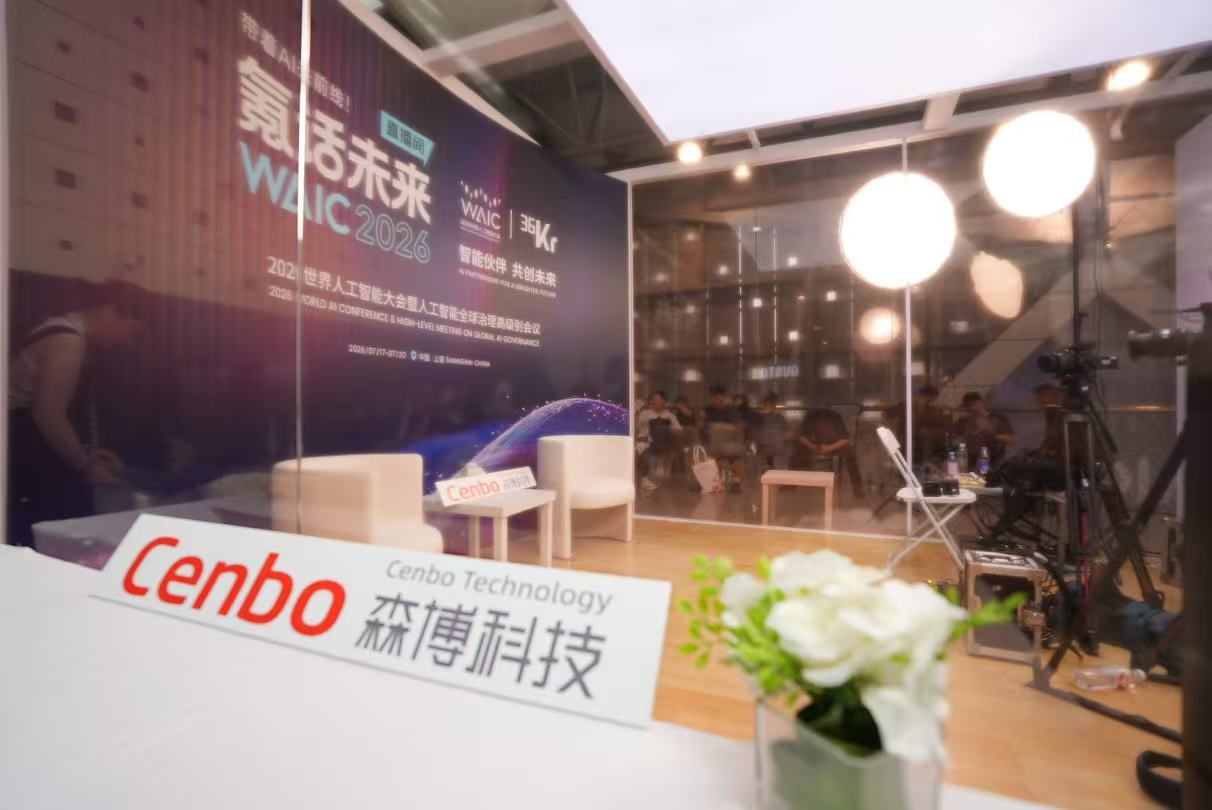
At the 2026 World Artificial Intelligence Conference (WAIC) in Shanghai, Yu Linyi, Chairman of Senbo Technology, emphasized that the true measure of enterprise AI is its ability to integrate into real business processes and deliver verifiable results, rather than solely focusing on technological prowess. He noted a significant industry shift from "technology seeking scenarios" to "scenarios refining technology," where the focus has moved from model parameters and demo effects to demonstrable return on investment (ROI). Yu explained that while general AI models are powerful, their effectiveness in enterprise settings depends heavily on business context, industry methodologies, and process understanding.
Senbo Technology's transition from a marketing services company to an AI-driven tech services firm was catalyzed by their experience building their own high-end brand, Keyu. This hands-on process of taking a brand from inception to market leadership allowed them to integrate their two decades of accumulated methodologies into AI agents, creating a feedback loop where AI results further refined their strategies. Senbo now trains AI agents that combine industry expertise with practical capabilities, differentiating themselves from traditional consultancies that sell human experience and pure AI firms whose models may lack domain-specific knowledge.
Yu highlighted that suitable AI agent applications require high digitalization, significant personnel and budget investment in the scenario, and clear, verifiable methodologies. He cited examples like AI search optimization (GEO) and influencer marketing, where Senbo developed proprietary models and techniques, such as the "multi-source mapping method" and the "dual-tower matching model," which have demonstrably saved clients significant marketing costs and improved efficiency. Senbo's "Empirical R&D System (BER)" ensures AI agents are rigorously tested in real business scenarios before deployment, involving scenario decomposition, methodology structuring, practical validation, and continuous feedback loops, all managed by their "Zhiwa" AI engine.
The discourse at WAIC 2026 signals a maturation of the AI industry, moving beyond theoretical capabilities to practical business integration. The emphasis on "scenarios refining technology" suggests that AI's future value will be unlocked by deep domain expertise and the ability to solve specific, complex business problems, rather than by raw algorithmic power alone. This shift implies that AI development will increasingly require close collaboration between AI specialists and industry veterans to build 'AI employee teams' that can demonstrably generate ROI. Companies that can successfully bridge this gap, by embedding AI within existing workflows and ensuring verifiable outcomes, are likely to gain a significant competitive advantage. The challenge ahead lies in scaling these integrated AI solutions across diverse business functions while maintaining their effectiveness and adaptability in dynamic market conditions.
AI-generated to prompt reflection — not editorial opinion, not advice, not a statement of fact. How this works.