AI Training Data: Graded Trajectories and the Data Flywheel
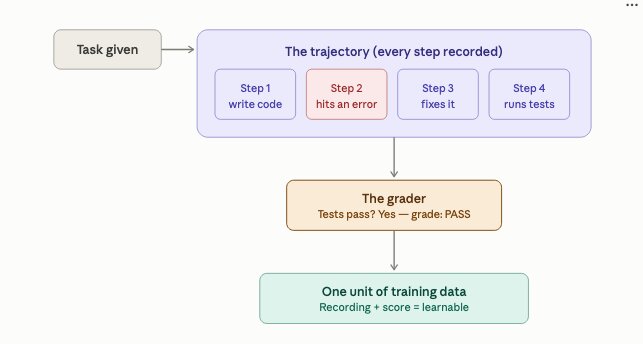
A graded trajectory represents the complete record of an AI's effort on a task, along with a judgment of its success. This graded trajectory is the foundational element for contemporary AI training data. A "free grader" is defined as any system that automatically generates these success verdicts at no additional cost. Examples of free graders include passing tests, interacting with physical reality, or receiving feedback from paying customers. The concept of the data flywheel suggests that the more data an AI processes, the better it becomes, which in turn generates more valuable data. This continuous improvement loop is crucial for advancing AI capabilities. The article implies that the efficiency and scalability of these grading mechanisms are key to accelerating AI development.
AI development hinges on efficient data grading mechanisms, which are essential for the "data flywheel" effect. As AI systems improve through iterative training on graded trajectories, their ability to generate valuable feedback or perform tasks that yield automatic grading increases. This self-reinforcing cycle, driven by free graders like customer interactions or objective performance metrics, can accelerate AI progress. However, the long-term sustainability and potential biases embedded within these grading systems warrant careful consideration. Ensuring that grading criteria remain robust and equitable will be critical for fostering trustworthy and broadly beneficial AI.
AI-generated to prompt reflection — not editorial opinion, not advice, not a statement of fact. How this works.