Airbus and MTU Aero Engines to Develop World's First Hydrogen-Electric Passenger Plane Engine
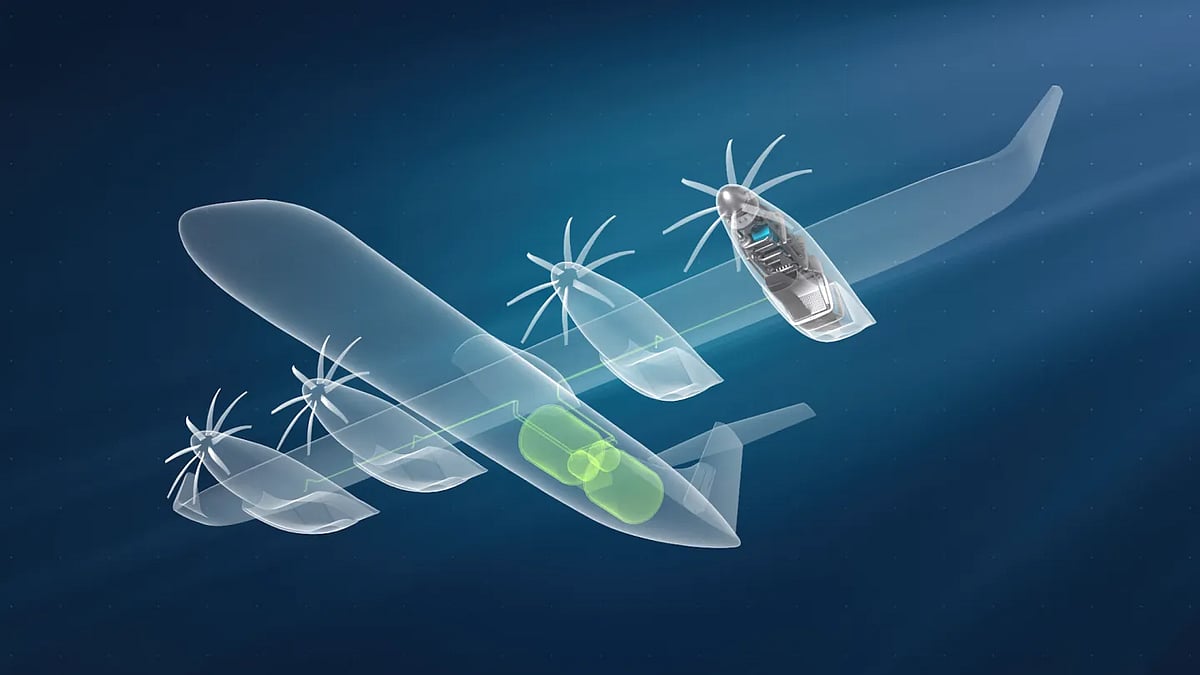
Airbus, a leading aircraft manufacturer, is collaborating with German engine maker MTU Aero Engines to develop the world's first passenger aircraft engine powered entirely by electric hydrogen fuel cells. This initiative aims to revolutionize air travel by eliminating toxic emissions, replacing them with pure water vapor. The partnership is a significant step towards realizing a long-held vision of sustainable aviation, previously considered an expensive fantasy.
The new engine will operate on a different principle than conventional jet engines. Instead of burning fossil fuels, it will use liquid hydrogen and oxygen from the air to generate electricity through an electrochemical reaction within a fuel cell. This electricity will then charge large lithium batteries, which will power the aircraft's motors. The only byproduct of this process is water vapor, offering a completely emission-free alternative to current aviation technology.
Airbus announced its 'Zero-E' project in 2020, and the current agreement with MTU finalizes a memorandum of understanding signed last year. While the concept is promising, significant engineering challenges remain, particularly in storing liquid hydrogen, which requires extremely low temperatures (-253°C) and occupies more space than conventional jet fuel. This will necessitate major redesigns of aircraft to accommodate the necessary hydrogen tanks. If all goes according to plan, Airbus hopes to see these new-generation hydrogen aircraft commercially flying by 2035, supported by a developing ecosystem for hydrogen aviation infrastructure.
The development of hydrogen-electric propulsion for passenger aircraft represents a significant technological pivot in the aviation industry's pursuit of decarbonization. While promising a zero-emission future, the substantial infrastructure and technological hurdles, particularly concerning cryogenic fuel storage and energy density, require careful consideration of long-term viability and scalability. The transition necessitates not only engine innovation but also a comprehensive overhaul of airport logistics and aircraft design. This endeavor highlights a broader industry trend towards exploring radical technological solutions to meet ambitious climate targets, balancing immediate environmental pressures with the practicalities of complex, capital-intensive aerospace engineering.
AI-generated to prompt reflection — not editorial opinion, not advice, not a statement of fact. How this works.