Airbus Completes Record 24-Hour Test Flight for Qantas
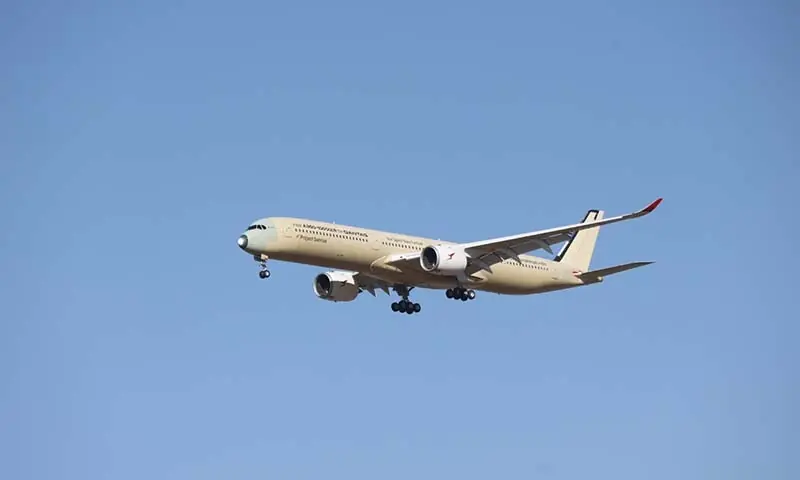
Airbus has successfully completed a record-breaking 24-hour test flight of a specially modified A350 aircraft, flying from Australia to France. The journey covered 23,076 kilometers across three continents and two oceans, attracting significant attention on flight tracking sites. This flight is a critical precursor to Qantas receiving its first A350-1000ULR in April next year, with eleven more to follow. These aircraft are designed for ultra-long-distance routes, enabling non-stop services from Australia to destinations in the United States and Europe. The A350-1000ULR's extended range is facilitated by an additional 20,000-liter rear center fuel tank. The test flight duration was precisely 24 hours and 24 minutes, simulating a commercial service trajectory. Qantas has ambitious plans for ultra-long-haul flights, including a Sydney to London route starting in October 2027 and future services to New York. The test flight involved a crew of eight Airbus test pilots and engineers, along with two Qantas pilots, who evaluated aspects like the fuel tank integration, cabin acoustics, and air circulation. Qantas's 'Project Sunrise,' aimed at establishing these ultra-long-haul capabilities, has been in development for nine years but faced delays. Currently, the longest commercial flight is Singapore Airlines' Singapore to New York route, covering 15,350 kilometers.
This record flight demonstrates significant advancements in aviation technology, particularly in enabling ultra-long-distance commercial travel. The successful integration of extended fuel capacity and the subsequent performance testing highlight the engineering solutions required to overcome the physical limitations of current aircraft designs. The collaboration between Airbus and Qantas underscores a strategic industry push towards optimizing global connectivity and catering to evolving passenger demand for direct routes. As the aviation sector navigates the complexities of sustainability and operational efficiency, such innovations are crucial for shaping future travel paradigms, potentially reducing the need for intermediate stops and their associated environmental and logistical impacts. The development also points to a future where flight times are measured in full days, necessitating careful consideration of passenger well-being and crew endurance.
AI-generated to prompt reflection — not editorial opinion, not advice, not a statement of fact. How this works.