AJK Government Launches Operation to Reopen Routes Blocked by Banned JAAC
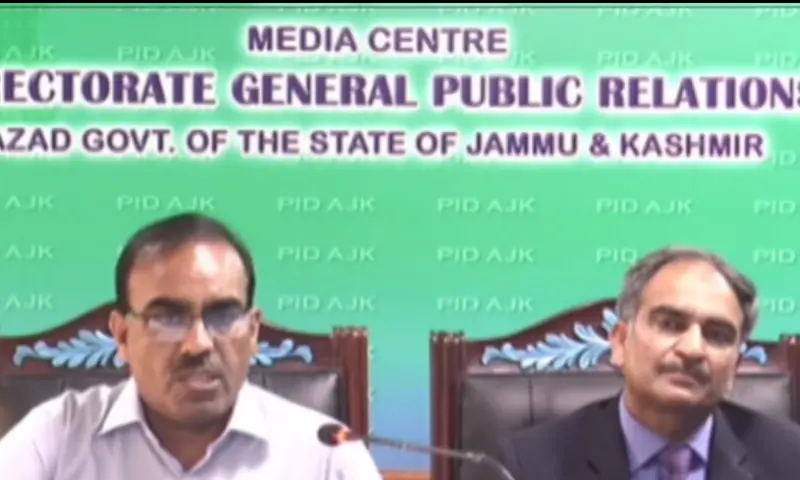
The Azad Jammu and Kashmir (AJK) government announced on Tuesday that an operation is underway to clear entry and exit points that have been obstructed by the banned Jammu and Kashmir Awami Action Committee (JAAC). AJK Home Secretary Chaudhry Guftar Hussain stated that the operation would continue until all routes are reopened, vowing to deal with "blackmailers" firmly. He emphasized the government's commitment to protecting lives, property, and economic activities, and restoring normalcy in the region. Hussain detailed a violent incident in Rawalakot where JAAC "miscreants" allegedly initiated indiscriminate firing and attacked police officers with automatic weapons and explosives, resulting in the death of one officer and injury to another. The home secretary justified the operation by citing the JAAC's possession of modern weaponry. He also mentioned that JAAC leader Khwaja Mehran had issued a 48-hour deadline to close state entry points, but asserted that the group lacked the power to do so and was attempting to mislead the public. The AJK government estimates billions in losses due to JAAC disruptions affecting tourism, business, and transport, characterizing the group as enemies of peace and development. The banking system has reportedly been restored following official intervention. The AJK's education secretary expressed concern that the JAAC might use women, children, and students as human shields, leading to directives for educational institutions to prevent student involvement in protests. Higher education institutions, including medical colleges, have reopened. Earlier, a former JAAC member had urged the leadership to call off a long march and sit-in in Rawalakot due to hardships and loss of life in Poonch. Clashes on Saturday between protesters and law enforcement near Rawalakot resulted in at least one death and several injuries. The AJK government declared the JAAC a proscribed organization on June 5, followed by a crackdown and arrests of its leaders and activists.
The AJK government's response to the JAAC's actions highlights a critical tension between maintaining public order and addressing citizen grievances. By labeling the JAAC as "blackmailers" and "enemies of the state," the government frames the conflict as a security challenge, justifying forceful intervention and the use of modern weaponry. This narrative, however, may obscure underlying socio-economic issues that fuel public discontent and the JAAC's activism. The government's emphasis on economic continuity and normalcy, while essential, could be perceived as prioritizing state interests over the resolution of root causes. The situation underscores the challenge of balancing state authority with the right to protest, particularly when such actions disrupt essential services and economic activity. Future approaches might consider de-escalation strategies that incorporate dialogue and address the specific economic and social concerns driving such disruptive protests, rather than solely relying on security measures.
AI-generated to prompt reflection — not editorial opinion, not advice, not a statement of fact. How this works.