AJK Supreme Court Delays Ruling on PTI's Provisional Party Registration Amidst Election Season
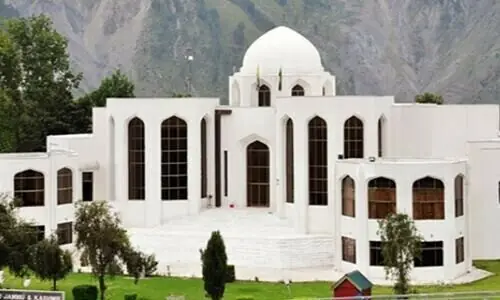
The Azad Jammu and Kashmir (AJK) Supreme Court has postponed a hearing concerning the Election Commission's request to suspend a high court order mandating the provisional registration of Pakistan Tehreek-e-Insaf (PTI) as a political party. A full bench, led by Chief Justice Raja Saeed Akram, decided to combine the Election Commission's application for interim relief with its main petition for leave to appeal. This decision came after the AJK High Court had previously directed the Election Commission on June 23 to provisionally register PTI, overriding the commission's May 16 rejection of the party's registration. The Election Commission subsequently appealed this order to the Supreme Court. At a prior session, PTI's legal counsel requested an adjournment, leading the Chief Justice to temporarily suspend the high court's order until July 2. During Thursday's proceedings, the Supreme Court agreed to hear the Election Commission's application concurrently with its leave to appeal petition. No new hearing date was set. Given that the Supreme Court is entering a summer recess from Monday until October 7, the case is unlikely to be resolved before the upcoming general elections on July 27, leaving PTI's provisional registration status uncertain during the electoral period.
The AJK Supreme Court's deferral of the PTI registration case, particularly with the upcoming summer recess and general elections on July 27, creates a period of legal ambiguity for the party's electoral participation. This situation highlights the complex interplay between judicial processes and electoral timelines, where delays can significantly impact political actors. The court's decision to hear the interim relief application alongside the main appeal suggests a procedural approach to ensure thoroughness, but the practical effect is a postponement of a definitive ruling. This outcome could be interpreted through the lens of electoral dynamics, where unresolved legal statuses can influence campaign strategies and voter perceptions, even if the court's intent is purely judicial. The extended recess further complicates the timely resolution of such matters, raising questions about the capacity of the judicial system to address urgent electoral legal challenges within compressed timelines.
AI-generated to prompt reflection — not editorial opinion, not advice, not a statement of fact. How this works.