Alaska University Ionosphere Study Project Did Not Cause Venezuela Earthquake
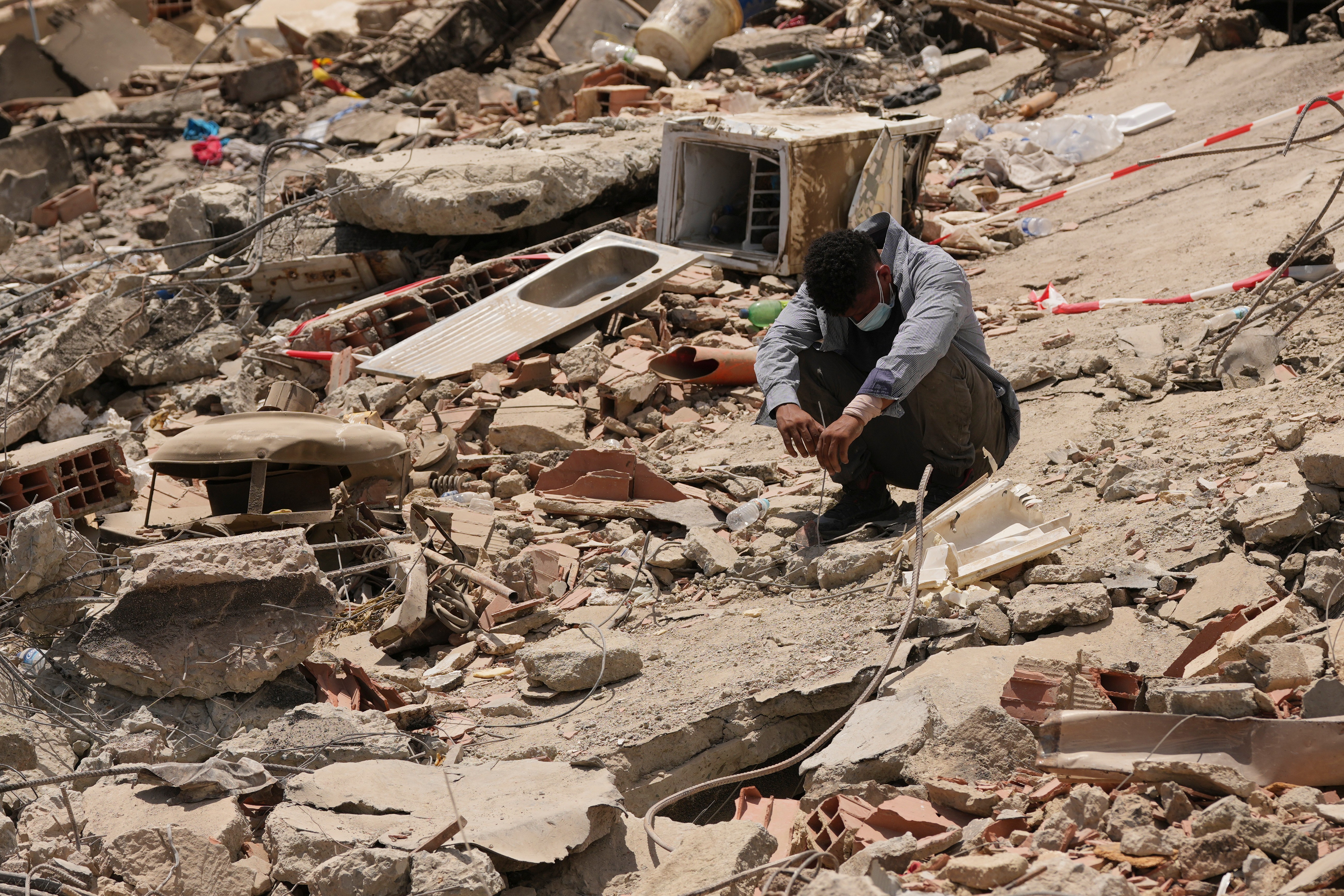
Social media posts falsely claim that the High-frequency Active Auroral Research Program (HAARP), operated by the University of Alaska Fairbanks, caused the recent earthquake in Venezuela. These posts, which have garnered millions of views, feature videos of a reddish sky and flashes in Caracas and La Guaira, cities affected by the June 24 earthquake. The accompanying captions allege these unusual sky phenomena are evidence of HAARP being used to trigger the tremors.
However, experts refute this connection. Professor Micael Cecchini from the University of São Paulo's Institute of Astronomy, Geophysics, and Atmospheric Sciences stated that HAARP, which studies the ionosphere, has no capability to generate earthquakes. He explained that HAARP uses electromagnetic waves, similar to light, and cannot influence weather or cause seismic events. The earthquakes, which were the strongest in Venezuela in over a century, were officially attributed by the U.S. Geological Survey (USGS) to the tectonic shift between the Caribbean and South American plates. The USGS noted that these plates move against each other at approximately 20 mm per year, causing deep strike-slip faulting.
Cecchini further clarified that the intense red sky observed after the earthquake is likely due to Rayleigh scattering, an atmospheric phenomenon intensified by dust particles stirred up by the seismic activity. He also suggested that flashes seen after the tremors could be a result of electrical charges generated by the friction of tectonic plates. These atmospheric displays, while unusual, are indirect consequences of the earthquake and not indicative of HAARP's involvement or future seismic activity.
The spread of misinformation linking the HAARP project to the Venezuelan earthquake highlights a recurring pattern of attributing natural disasters to human-made technological interventions. This narrative often emerges during significant events, exploiting public anxiety and a lack of technical understanding. HAARP's stated purpose is scientific research into the ionosphere, a region far above the Earth's surface. The scientific consensus, as presented, firmly debunks any causal link between HAARP's operations and seismic activity, attributing the earthquake to well-understood geological processes. The persistence of such theories suggests a need for improved public scientific literacy and critical evaluation of information, particularly in the digital age where unverified claims can rapidly gain traction. Future technological advancements, while potentially powerful, must be communicated transparently to mitigate the risk of their misuse in conspiracy narratives.
AI-generated to prompt reflection — not editorial opinion, not advice, not a statement of fact. How this works.