Albert Einstein's Biggest Misjudgments and Their Unexpected Value
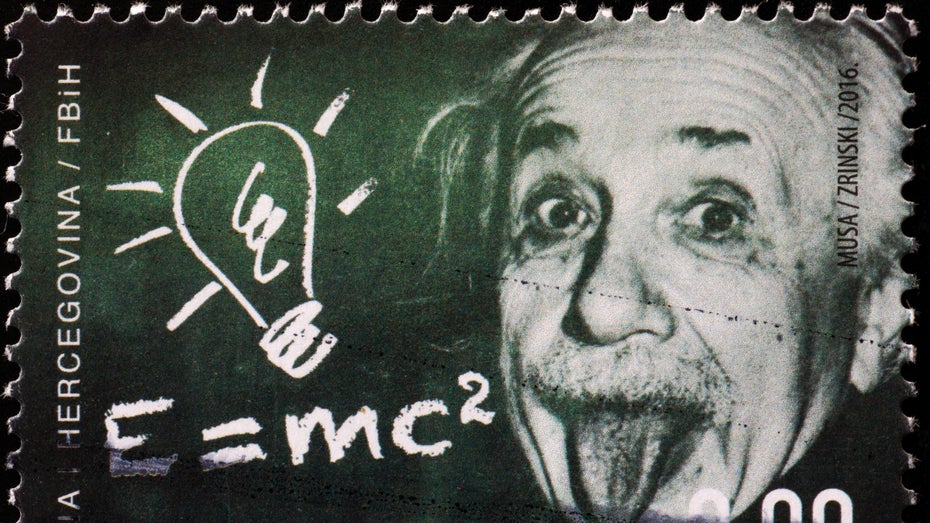
The history of science is frequently marked by unforeseen turns, demonstrating that even the most brilliant minds can make significant errors when deeply held beliefs overshadow rigorous mathematical analysis. This phenomenon is particularly evident in the work of Albert Einstein, whose profound convictions sometimes led him to misinterpret or reject emerging scientific concepts. Despite his unparalleled genius, Einstein famously struggled with certain aspects of quantum mechanics, a field he helped pioneer. His skepticism was rooted in his belief in a deterministic universe, famously encapsulated in his quote, "God does not play dice." He found the probabilistic nature of quantum theory unsettling, as it challenged his fundamental understanding of physical reality. Another notable instance was his initial dismissal of gravitational waves, which were later confirmed and are now a crucial tool in astrophysics. While these misjudgments might seem like failures, they paradoxically served a vital purpose in the scientific process. Einstein's profound objections and persistent questioning pushed the boundaries of understanding and forced physicists to rigorously defend and refine quantum theory and other groundbreaking ideas. His challenges stimulated deeper investigation and ultimately led to a more robust and comprehensive scientific framework. Therefore, even Einstein's greatest misjudgments contributed significantly to the advancement of science by fostering critical debate and driving further discovery.
Albert Einstein's intellectual journey, including his notable misjudgments, highlights a recurring dynamic in scientific progress: the tension between established paradigms and revolutionary new theories. His resistance to quantum mechanics, driven by a belief in determinism, underscores how deeply ingrained philosophical perspectives can influence scientific interpretation. While his objections were ultimately overcome by empirical evidence and theoretical advancements, they spurred critical examination and debate within the physics community. This process, though sometimes slow and contentious, is essential for validating new scientific frontiers and ensuring that theories are robustly supported. The legacy of such debates suggests that even the most profound thinkers can benefit from rigorous challenge, and that the scientific method's strength lies in its capacity for self-correction, often propelled by the very disagreements it generates.
AI-generated to prompt reflection — not editorial opinion, not advice, not a statement of fact. How this works.