Alcatraz's Birdman: The Unbelievable Life of a Notorious Killer
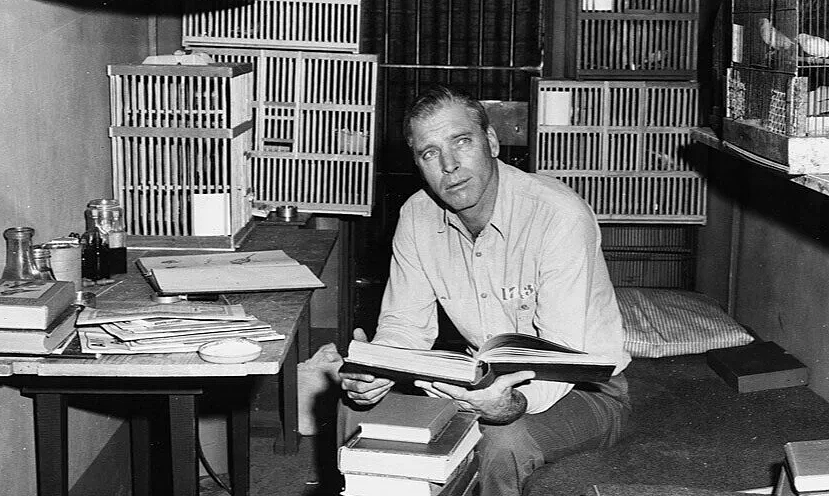
Robert Stroud, widely known as the 'Birdman of Alcatraz,' is one of the most famous inmates to have ever been held in the notorious prison. His life story is remarkable, transitioning from a convicted criminal to a respected ornithologist. Stroud spent a significant portion of his life incarcerated, during which he developed a deep passion and expertise in studying birds. Despite the harsh realities of prison life, he managed to conduct extensive research and even authored a book on bird diseases. His dedication to his studies earned him a unique place in penal history, making him a subject of fascination for many.
Stroud's journey highlights an extraordinary transformation within the confines of a maximum-security prison. He arrived at Alcatraz in 1942 and remained there until his transfer to Springfield Medical Center in 1959. During his time at Alcatraz, he was initially denied access to birds but eventually gained permission to keep and study them. His work contributed to the understanding of avian health, and his book, 'Diseases of Canaries,' became a significant reference. The 'Birdman of Alcatraz' remains a compelling figure, embodying resilience and intellectual pursuit against formidable odds.
Robert Stroud's narrative, often sensationalized as the 'Birdman of Alcatraz,' presents a complex case study in human adaptation and the potential for intellectual development even within severe penal environments. While his ornithological achievements are notable, it is crucial to separate the scientific contributions from the underlying criminal history and the prison system's role. The system that facilitated his research also confined him for decades, raising questions about rehabilitation versus incapacitation. Examining Stroud's case through a future-oriented lens prompts consideration of how correctional facilities can better balance security with opportunities for meaningful personal growth and societal contribution, potentially reducing recidivism and fostering a more humane approach to incarceration in the AI era, where data analytics could inform individualized rehabilitation pathways.
AI-generated to prompt reflection — not editorial opinion, not advice, not a statement of fact. How this works.