Alexander Zverev focuses on personal performance for Wimbledon success
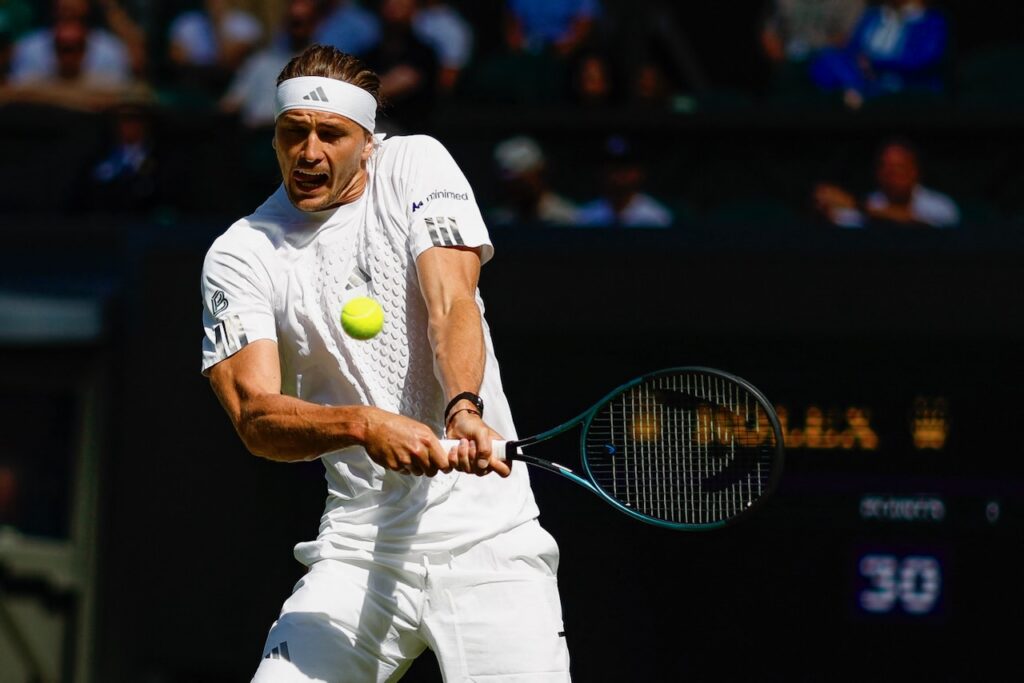
French Open champion Alexander Zverev believes his Wimbledon aspirations hinge solely on his own performance, even though the men's singles draw appears open. The world number three advanced past Belgian newcomer Alexander Blockx in his first-round match, a challenging four-set encounter that concluded with Zverev winning 6-4, 6-7 (8/10), 7-6 (7/5), 7-6. Despite the apparent opportunities presented by a less crowded section of the draw, Zverev maintains that his focus remains internal. His primary objective is to achieve his best performance at the tournament, independent of the perceived strengths or weaknesses of his potential opponents. This mindset suggests a strategic emphasis on self-mastery and consistent execution throughout the competition. Zverev's statement underscores a commitment to controlling the controllable aspects of his game as he navigates the early stages of the Wimbledon championships.
Alexander Zverev's assertion that his Wimbledon success depends solely on his own performance, irrespective of the draw's openness, highlights a common psychological strategy in elite sports. This self-referential focus aims to mitigate external pressures and cultivate a sense of agency, particularly crucial in high-stakes tournaments. From a systems perspective, such an approach can foster resilience by emphasizing internal locus of control, which is vital for navigating the inherent volatility of competitive sports. However, an overemphasis on individual control might overlook the strategic advantages derived from analyzing and adapting to the broader competitive landscape, including opponent tendencies and draw dynamics. The AI era may offer new avenues for data-driven strategic analysis, potentially complementing Zverev's current mindset by providing deeper insights into opponent vulnerabilities and optimal match-play strategies, thereby enhancing performance beyond purely internal metrics.
AI-generated to prompt reflection — not editorial opinion, not advice, not a statement of fact. How this works.