Alien signals might be hidden in overlooked radio frequencies, study suggests
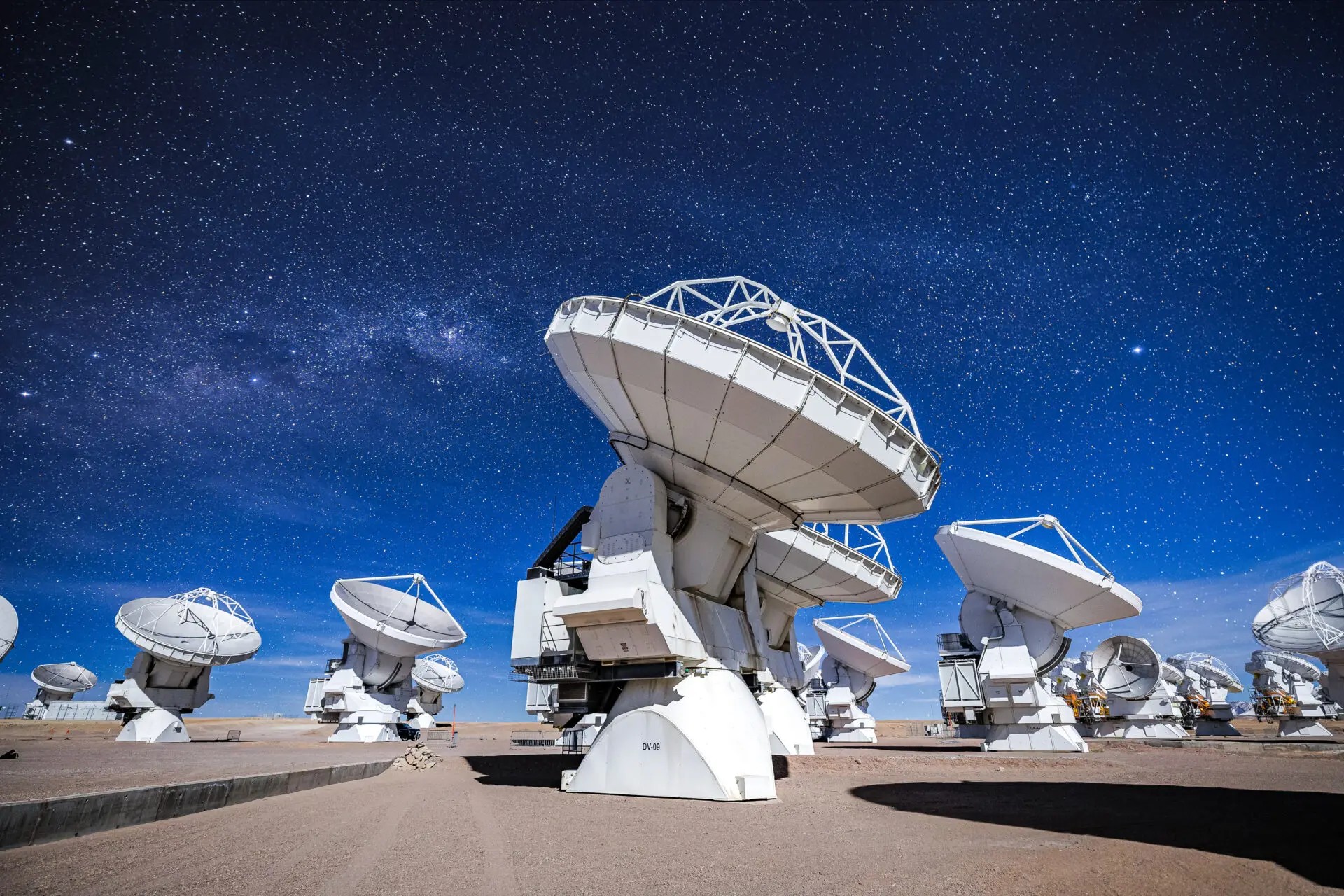
A new study presented in the United Kingdom suggests that potential signals from extraterrestrial civilizations could be concealed within a less-explored region of the radio spectrum. Researchers utilized data from the Atacama Large Millimeter/submillimeter Array (ALMA) in Chile, analyzing archival data originally collected for other astronomical purposes. This approach marks the first search for extraterrestrial intelligence (SETI) signals using ALMA. Traditionally, SETI efforts focus on a quiet band between hydrogen and hydroxyl frequencies, considered a logical communication channel for advanced civilizations due to their role in forming water. However, this latest research ventured into higher, less-investigated frequencies, seeking narrow-band transmissions indicative of technological origin and unlikely to occur naturally. While no candidate signals were detected in the four analyzed observations, this outcome does not rule out the existence of extraterrestrial life. It simply indicates that no transmissions were identified within the specific narrow bands and regions examined. Louisa Mason, a doctoral student at the University of Manchester and lead author of the study, stated that the research aimed to explore regions beyond the historically limited focus of SETI. The study also revealed that a single observation might encompass far more stars than previously estimated. By applying a Milky Way model to prior surveys, the estimated number of stars potentially observed increased dramatically from approximately 288,000 to over 6.1 million. This broader reach is attributed to telescopes capturing numerous other stars within the same field of view, including distant, faint, or cataloged stars. The findings imply that previous searches might have covered a larger portion of the Milky Way than assumed, and observatories capable of detecting higher frequencies could significantly expand the search for alien civilizations. Furthermore, existing astronomical data, even if collected for different purposes, can be re-analyzed for artificial transmissions.
This research highlights a methodological shift in the search for extraterrestrial intelligence, moving beyond conventional frequency bands to explore underutilized portions of the radio spectrum. By leveraging existing astronomical data, the study demonstrates an efficient approach to expanding the scope of SETI without requiring new observational resources. The significant increase in the estimated number of stars covered per observation suggests that previous searches may have had a wider reach than initially calculated, potentially increasing the probability of detecting signals if they exist. This work prompts a re-evaluation of historical SETI strategies and underscores the value of data re-analysis in scientific discovery, particularly in the context of potentially vast and under-explored cosmic phenomena. Future efforts may benefit from this expanded perspective, considering the vastness of the galaxy and the diverse technological capabilities that alien civilizations might possess.
AI-generated to prompt reflection — not editorial opinion, not advice, not a statement of fact. How this works.