Alpine Flooding: Centuries-Old Deluges May Become More Frequent
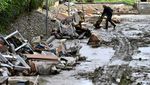
Contrary to common assumptions, a new calculation suggests that centuries-old flood events in the Alps may occur more frequently. The prevailing expectation is that reduced snowfall and less meltwater in mountainous regions would lead to fewer flood events. However, this new analysis challenges that notion, indicating a potential increase in the occurrence of severe floods. The traditional understanding links heavy rainfall and rapid snowmelt to catastrophic flooding in alpine areas. Yet, climate change impacts, such as altered precipitation patterns and temperature shifts, could be creating conditions that paradoxically favor more frequent extreme flood events. This suggests a complex interplay of factors influencing hydrological cycles in the Alps. Further research is needed to fully understand the implications of these findings for flood risk management and infrastructure planning in the region. The study's findings prompt a re-evaluation of existing flood prediction models and adaptation strategies.
The traditional understanding of alpine hydrology, which links reduced snowpack and meltwater to decreased flood risk, is being challenged by new modeling. This suggests that climate change may be introducing complex, non-linear effects on flood frequency. Factors such as altered rainfall intensity, changes in soil moisture, and the timing of snowmelt could combine to increase the likelihood of extreme events, even with less overall snow. This necessitates a shift in risk assessment from solely relying on historical patterns to incorporating forward-looking climate projections. Future flood management strategies will need to be more adaptive, considering a wider range of potential hydrological scenarios and the dynamic nature of alpine ecosystems under a changing climate.
AI-generated to prompt reflection — not editorial opinion, not advice, not a statement of fact. How this works.