Alta Floresta Titi Monkey Photographed Crossing Canopy Bridge With Infant
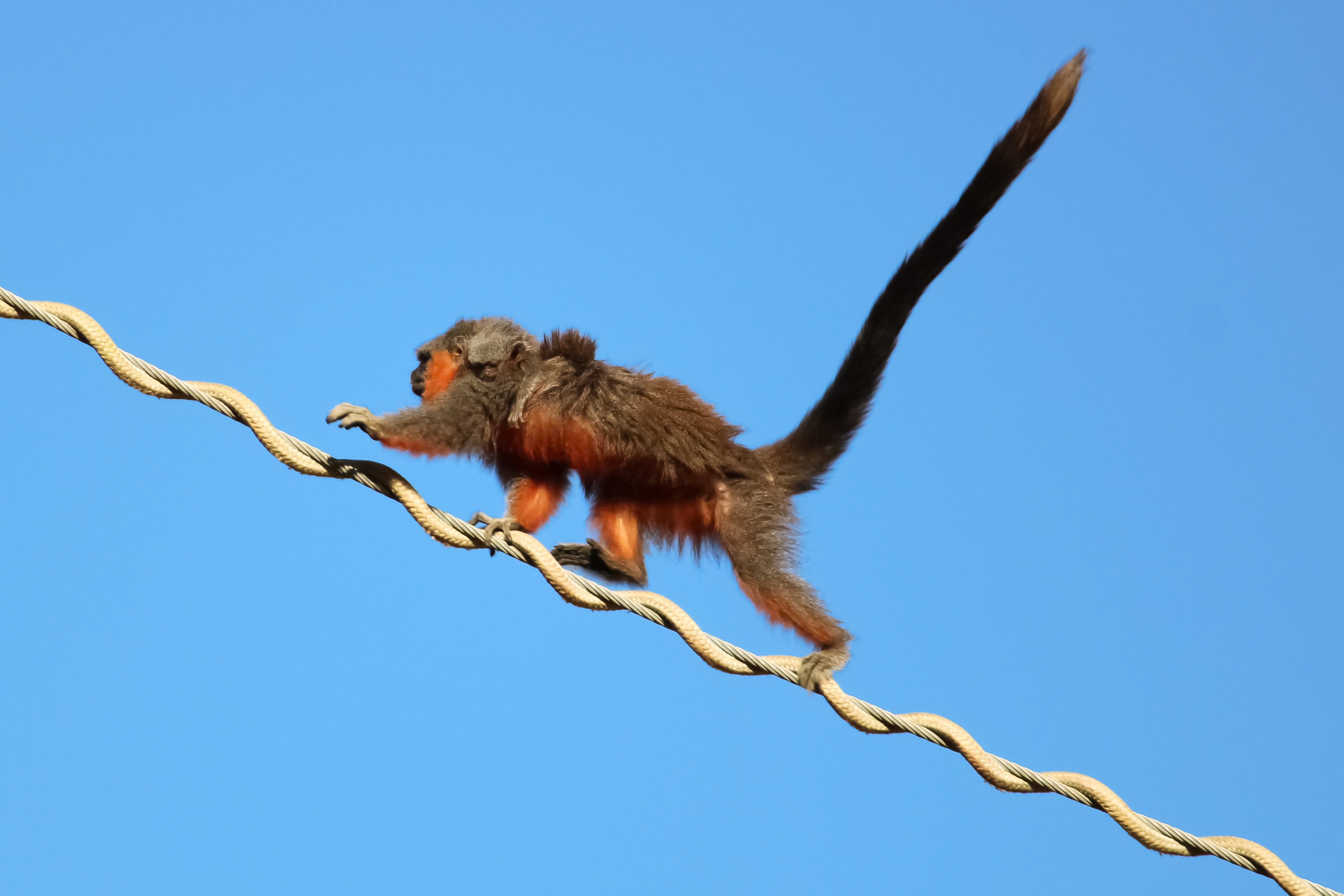
Nature photographer Ivã Schuster captured a remarkable image of an Alta Floresta titi monkey (Plecturocebus grovesi) traversing a canopy bridge with its infant on its back in Alta Floresta, Mato Grosso, Brazil. This structure is part of the "Alta Floresta Não Atropela" (Alta Floresta Doesn't Run Over) program, which monitors wildlife crossings over urban roads with support from the Reconecta Project, led by researcher Fernanda Abra. The photograph symbolizes the intersection of biodiversity conservation, urban planning, and scientific endeavor. In just 15 months, the "Alta Floresta Não Atropela" program has recorded over 15,000 wildlife crossings using these installed structures, demonstrating their integration into the local fauna's routine and their success in mitigating road infrastructure impacts. These canopy bridges not only reduce the risk of animal-vehicle collisions but also restore landscape connectivity, enabling safe movement between forest fragments for resources and territory. The presence of the infant highlights how new generations are born into an environment where these safe pathways are already an established part of the urban landscape. The Alta Floresta titi monkey, scientifically described in 2019, is endemic to the region between the Teles Pires and Juruena rivers and is recognized as the municipality's symbolic mammal. The image underscores the effectiveness of the Reconecta Project, whose coordinator Fernanda Abra has received international awards for her work on reducing infrastructure impacts on biodiversity. Both Abra and Schuster expressed optimism, with Schuster noting the bridges' role in ensuring the species' future and providing hope.
This event showcases a successful human-wildlife coexistence strategy in an urbanizing environment, driven by scientific research and community engagement. The "Alta Floresta Não Atropela" program and the Reconecta Project demonstrate how infrastructure can be adapted to support biodiversity, rather than solely impede it. The use of canopy bridges addresses the critical issue of habitat fragmentation and road mortality, particularly for arboreal species like the titi monkey. The long-term success will depend on continued monitoring, adaptive management, and the integration of such initiatives into broader urban development and conservation policies. As urban expansion continues globally, replicating and scaling these nature-based solutions will be crucial for maintaining ecological connectivity and safeguarding species in the face of human-dominated landscapes.
AI-generated to prompt reflection — not editorial opinion, not advice, not a statement of fact. How this works.