Amazon deforestation drops 38%, but state remains third-highest in Brazil
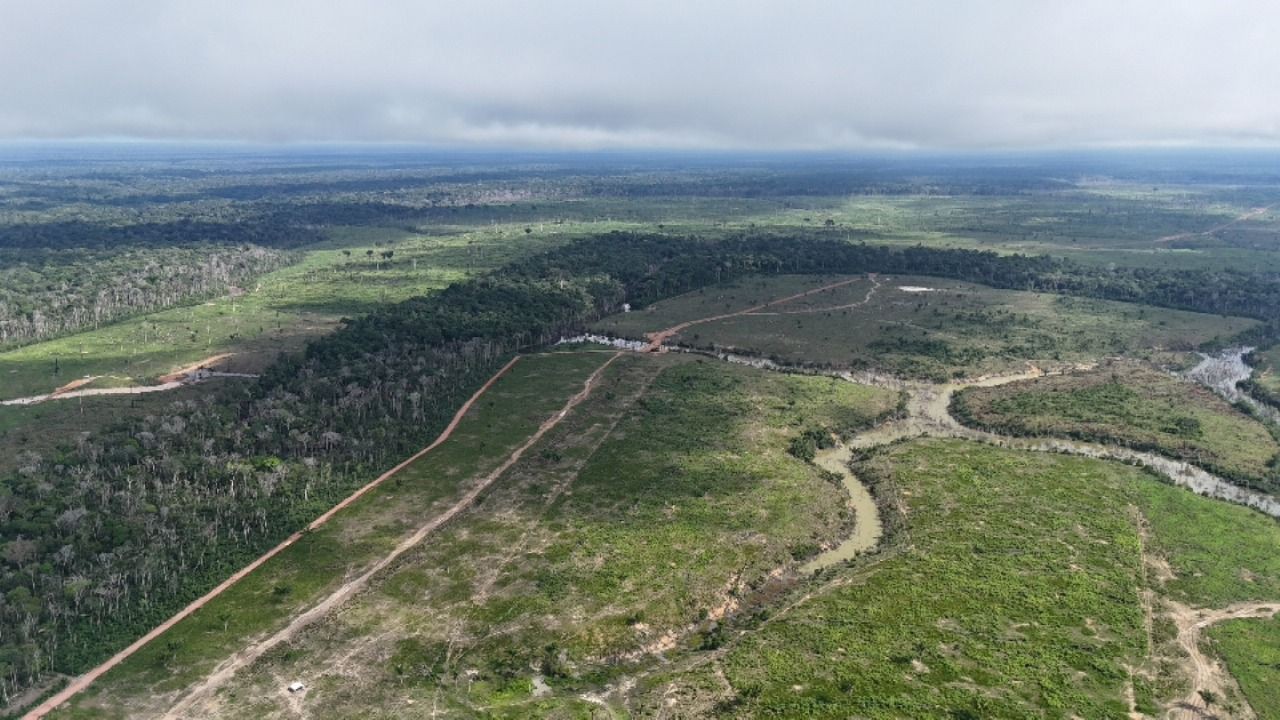
Deforestation in Amazonas, Brazil, decreased by 38% between August 2025 and June 2026 compared to the previous year, according to the Institute of Man and Amazon Environment (Imazon). Despite this significant reduction, Amazonas still ranks as the third-largest area of forest cleared in the Legal Amazon region, with 378 square kilometers (km²) of forest loss. This figure places it behind Pará, which recorded 684 km², and Mato Grosso, with 509 km².
Imazon researcher Manoela Athaide emphasized that while these three states saw decreases, their substantial forest cover necessitates strengthened enforcement and punitive actions to prevent further deforestation. The report highlights that protected areas played a crucial role in this reduction, with over 80% of these territories experiencing no deforestation in the first half of 2026. Specifically, 330 Indigenous Lands (TIs) and 258 Conservation Units (UCs) remained intact. Notably, no Indigenous Land or Conservation Unit in Amazonas was among those with over 1 km² of deforestation during the January-June period.
Across the entire Legal Amazon, the total area deforested in the first semester of 2026 was 1,145 km², marking the lowest figure for this period in eight years. This represents a 76% decrease from the record high in the first half of 2022. Environmental degradation, including illegal logging and fires, also saw a dramatic drop of 93% during the "deforestation calendar" period (August to June).
The reported 38% decrease in deforestation in Amazonas, while positive, underscores the ongoing challenge of balancing economic activities with environmental preservation. The persistence of Amazonas as the third-highest state for forest loss, despite the reduction, suggests that systemic drivers of deforestation, such as land tenure issues and demand for agricultural or extractive resources, remain potent. The significant impact of protected areas, particularly Indigenous Lands and Conservation Units, in curbing deforestation highlights their critical role as a buffer. Future policy considerations should focus on reinforcing these protected zones and addressing the underlying economic incentives that drive forest clearing in unprotected areas, potentially through market-based conservation mechanisms or stricter land-use planning that accounts for long-term ecological stability and the growing imperatives of the AI era for resource management.
AI-generated to prompt reflection — not editorial opinion, not advice, not a statement of fact. How this works.