Amazon Rainforest Becomes 'Time Machine' to Simulate Future Climate Conditions
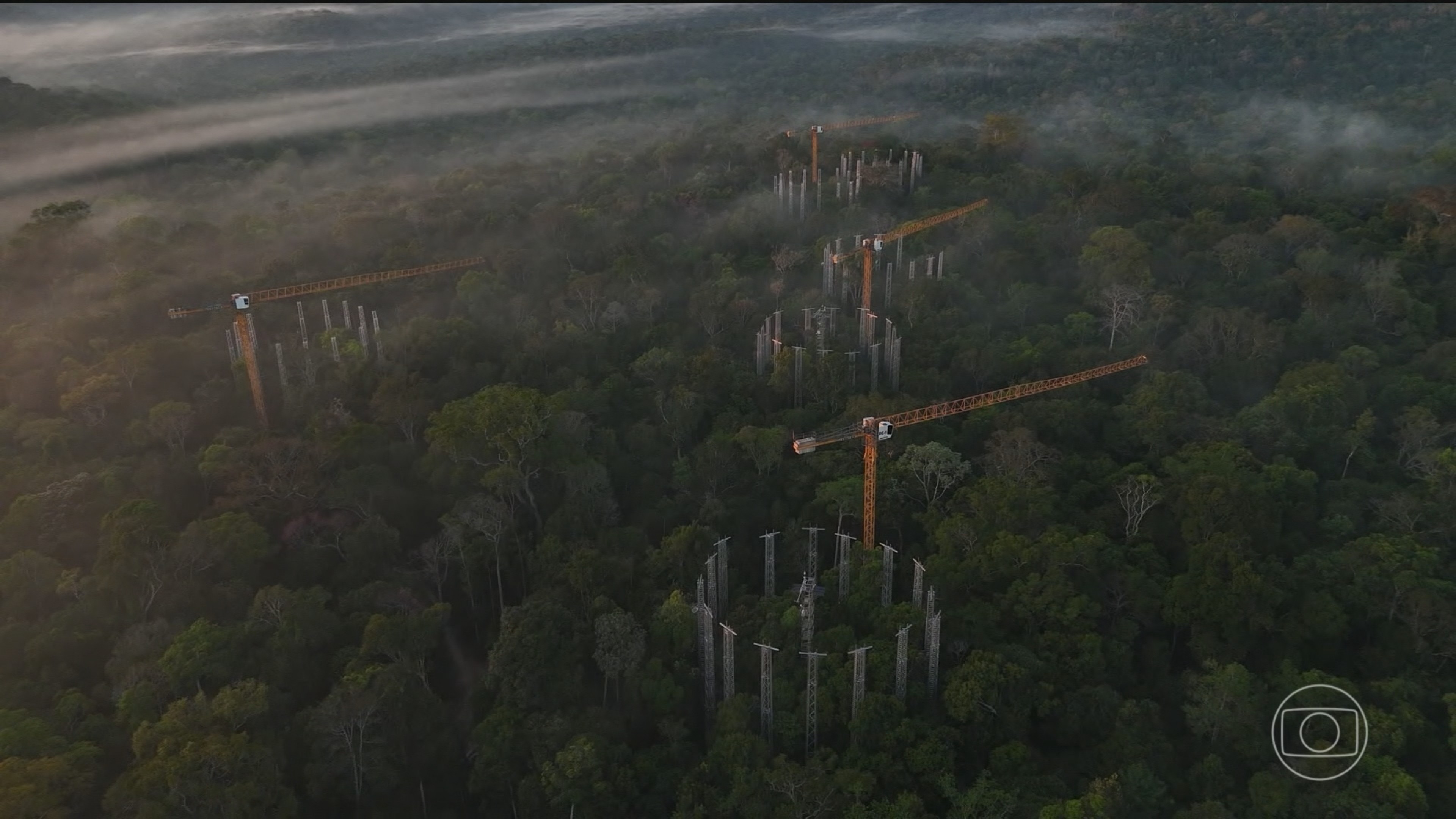
Scientists have established a unique facility deep within the Amazon rainforest to simulate future climate conditions, allowing researchers to study the potential impacts on the vital ecosystem. This "Amazon time machine," known as AmazonFace, consists of six large rings, each 30 meters in diameter, supported by 40-meter-tall towers. These towers are designed to release carbon dioxide (CO2) directly into the tree canopy in an open-air setting. The goal is to replicate the atmospheric conditions expected on Earth in 30 to 50 years, enabling scientists to understand how climate change will affect the functioning of the Amazon rainforest. The project involves detailed measurements of various processes, from photosynthesis at the top of the trees to the production of fine roots below ground. Data collected within these rings are fed into computers to simulate the long-term effects of climate change on larger areas. This initiative is a collaborative effort between the Brazilian Ministry of Science and Technology and the British government, involving researchers from INPA and Unicamp. A key concern is that increased CO2 levels might reduce the amount of water vapor released by trees, a process crucial for regional rainfall patterns. Scientists believe this research will provide critical insights for developing adequate public policies to address future climate scenarios. The Amazon's role in generating rainfall, which significantly impacts regions as far south as Brazil's southern states, underscores the importance of understanding these climate simulations for agriculture, energy production, and overall food security.
This project employs an experimental approach to forecast environmental shifts, utilizing controlled CO2 enrichment within a natural ecosystem. By simulating future atmospheric conditions, researchers aim to gain foresight into the Amazon's response, thereby informing policy and conservation strategies. The initiative highlights the interconnectedness of regional climate systems, demonstrating how changes in the Amazon can have far-reaching hydrological and agricultural consequences across South America. The methodology, while innovative, necessitates careful consideration of potential unintended ecological consequences of introducing elevated CO2 levels, even in a controlled setting. Understanding these complex feedback loops is crucial for developing robust climate adaptation and mitigation plans in an era of accelerating global change.
AI-generated to prompt reflection — not editorial opinion, not advice, not a statement of fact. How this works.