Amazon Rainforest Fires Plummet to Record Lows in 2025
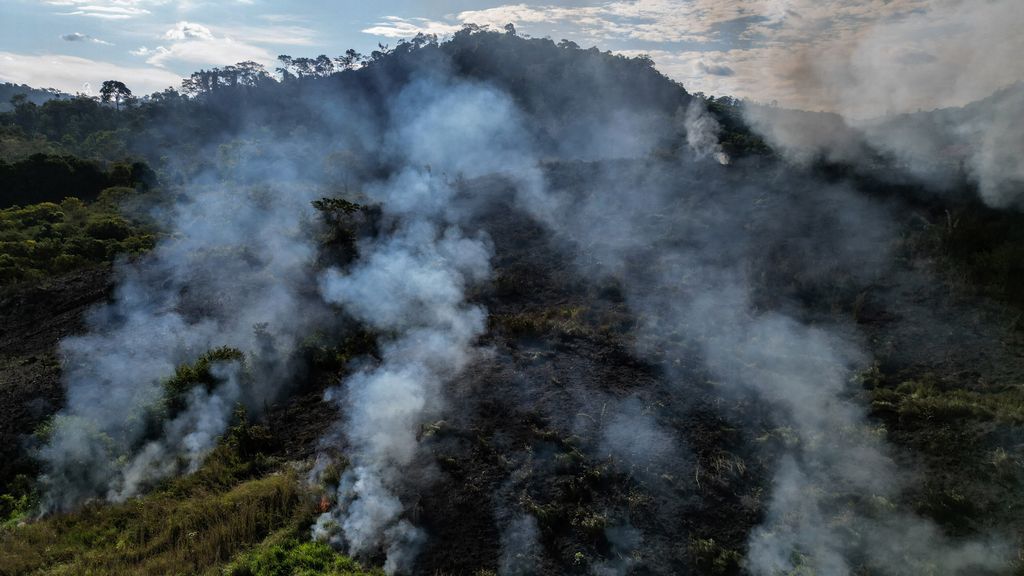
The Brazilian Amazon rainforest experienced its lowest rate of deforestation since measurements began in 1985, with approximately 3.1 million hectares burning in 2025. This marks a significant decrease from 2024, when a staggering 15.8 million hectares were consumed by fires, making it the worst year for Amazonian wildfires in over two decades. According to MapBiomas, which monitors deforestation, the reduction in 2025 is attributed to the La Niña weather phenomenon. La Niña, the counterpart to El Niño, typically has a cooling effect, contrasting with El Niño's tendency to cause higher global temperatures and extreme weather events like droughts or heavy rainfall. Climate change exacerbates these extreme weather risks, with El Niño adding further intensity. While the recent La Niña ended in spring, leading to a rapid shift towards El Niño, the previous El Niño in 2023 was associated with numerous weather records. MapBiomas researchers also note Brazil's improved preparedness for wildfires, with better identification of recurring fire areas and high-risk zones, enabling earlier preventive measures. Combating rainforest fires is a key priority for President Lula, who pledged to "completely stop" deforestation upon taking office on January 1, 2023. Fires are often intentionally set, particularly by farmers clearing land for agriculture. President Lula's administration implemented enhanced satellite monitoring of the rainforest shortly after his inauguration. However, his policies have faced criticism, with environmental activists opposing his approval of oil drilling at the mouth of the Amazon River.
The significant reduction in Amazonian deforestation fires in 2025, as reported by MapBiomas, presents a positive development, potentially influenced by meteorological cycles like La Niña. While improved monitoring and prevention strategies, aligned with President Lula's stated goals, likely contribute, attributing the decline solely to these factors requires careful consideration of the interplay with natural climate variations. The ongoing tension between conservation efforts and resource exploitation, exemplified by the approval of oil drilling, highlights a systemic challenge. Future policy decisions will need to balance immediate economic interests with long-term ecological stability, particularly in the context of accelerating climate change and the increasing frequency of extreme weather events. Navigating these competing demands will be crucial for the sustainable future of the Amazon and its global climate impact over the next decade.
AI-generated to prompt reflection — not editorial opinion, not advice, not a statement of fact. How this works.