Amazon River Communities' Lives Captured in New Santarém Photo Exhibit
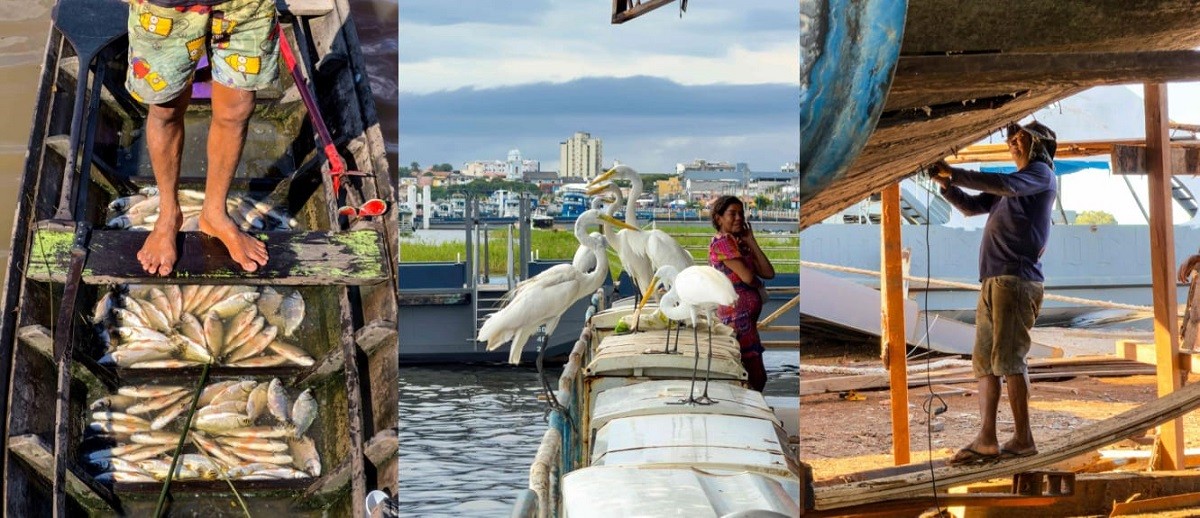
The "Rio que Alimenta" (River that Feeds) photographic exhibition opened on Saturday, August 1st, at the Porão Centro Cultural in Santarém, Pará, Brazil. The exhibition showcases approximately 40 photographs, accompanied by curatorial texts, that document the daily lives and challenges of communities in the Amazon region who depend on rivers for their sustenance. Areas featured include Lago do Maicá, Porto dos Milagres, Lago do Mapiri, and Feira do Pescado. The images highlight the experiences of men and women whose livelihoods are tied to fishing and natural resources, and who are navigating environmental changes. Photographer and executive director of the project, Andressa Azevedo, stated that the exhibition aims to connect the public with the realities of those directly reliant on the rivers for survival, emphasizing the urgency of climate change discussions through the lens of these communities. The project also includes educational initiatives throughout August, such as ten guided visits for public school and university students, and free photography workshops. Curatorial text researcher Alan Pessoa described the exhibition as a living historical record, illustrating how climate impacts are already reshaping life in the Lower Amazon and altering the long-standing relationship between communities and the river. The project received funding from the National Aldir Blanc Policy for Cultural Development (PNAB) through the State Secretariat of Culture (Secult-PA) and the Pará Cultural Foundation. The exhibition is free to the public and runs until August 31st, open weekdays from 2 PM to 8 PM.
This exhibition highlights the profound connection between Amazonian communities and their riverine environment, serving as a visual testament to their dependence on these waterways for survival. By documenting the daily lives and challenges faced by these populations, the project underscores the tangible impacts of environmental transformations and climate change on human settlements. The initiative's educational component, including guided tours and workshops, aims to foster greater public awareness and engagement with these critical issues. From a systems perspective, the exhibition implicitly critiques development models that may overlook or exacerbate the vulnerabilities of communities whose livelihoods are intrinsically linked to ecological stability. It prompts consideration of how policy and resource management can better support these populations and preserve their cultural heritage in the face of evolving environmental conditions, encouraging a dialogue on sustainable coexistence rather than imposing external solutions.
AI-generated to prompt reflection — not editorial opinion, not advice, not a statement of fact. How this works.