Amazon's Zoox Autonomous Taxi Gets US Commercial Operation Approval
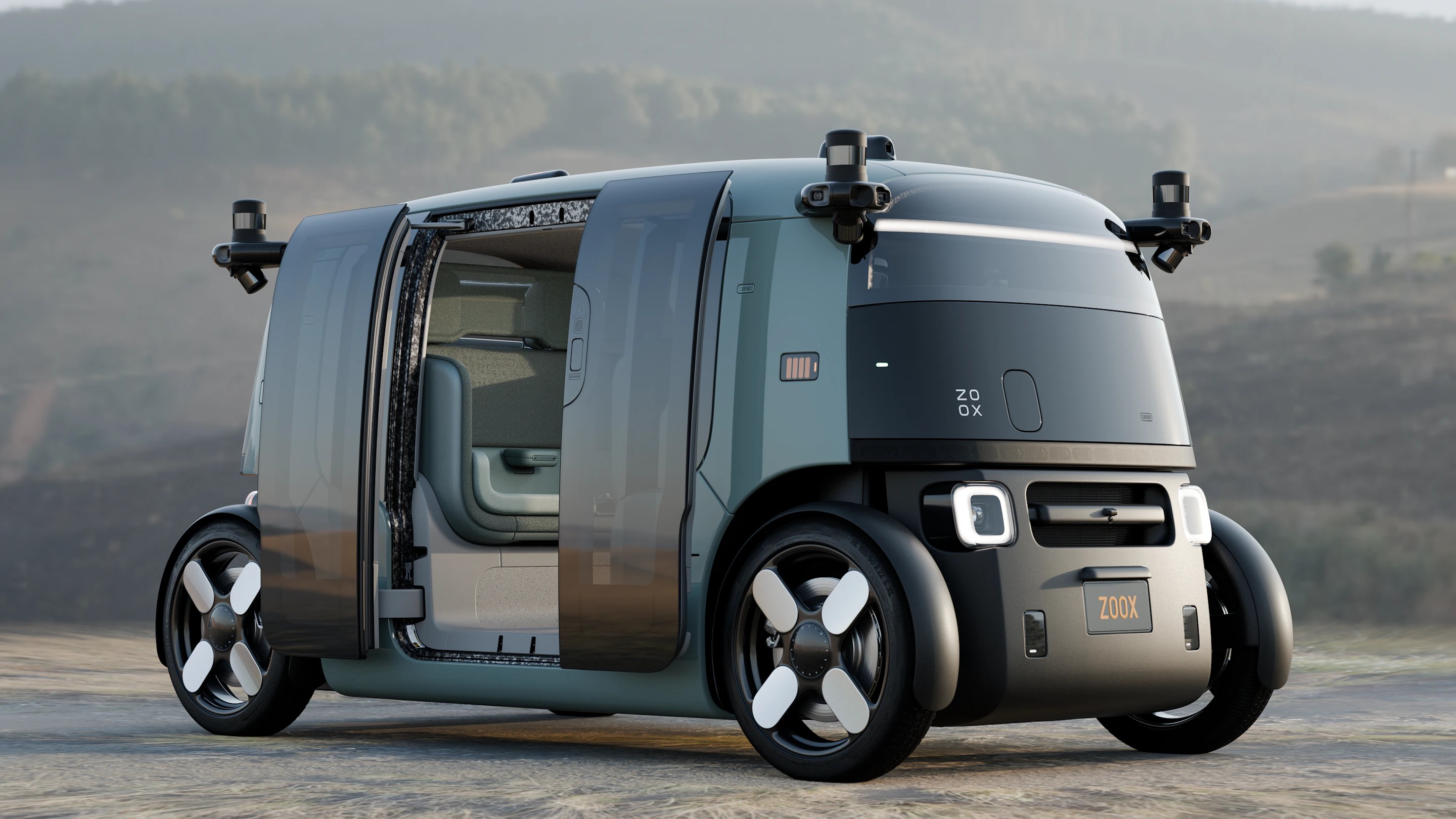
Zoox, an autonomous vehicle company owned by Amazon, has received approval from the U.S. National Highway Traffic Safety Administration (NHTSA) to begin a limited commercial operation of its driverless, pedal-less robotaxis. This marks a significant milestone for the autonomous vehicle industry, as it permits a vehicle designed from the ground up for human-free operation to enter commercial service. Unlike most competitors who adapt conventional cars, Zoox's vehicle was engineered without traditional driving controls.
The Zoox robotaxi features a compact electric cabin design with seats facing each other, competing in a market alongside Waymo (Alphabet) and Tesla. NHTSA administrator Jonathan Morrison stated that Zoox is authorized to deploy up to 2,500 vehicles annually for the next two years. The agency determined that Zoox's autonomous system meets safety standards equivalent to conventional vehicles, despite the absence of a steering wheel or pedals. However, Zoox must regularly report incidents like accidents and unexpected stops to NHTSA, with the potential for its exemption to be suspended if significant safety issues arise.
Currently, Zoox is testing its service with passengers in Las Vegas and San Francisco. The federal approval allows them to start charging for rides, provided they also secure necessary state and local licenses. The NHTSA is also working on establishing federal standards for autonomous driving systems and reviewing existing regulations that mandate features like steering wheels. Despite this regulatory progress, challenges remain, including ensuring robotaxis can safely navigate complex scenarios and interact appropriately with emergency services, an area where NHTSA has recently urged immediate corrective actions from autonomous vehicle companies.
The U.S. NHTSA's approval for Zoox's driverless taxi operation represents a pivotal regulatory step, acknowledging that purpose-built autonomous vehicles can meet safety benchmarks without traditional human controls. This decision could accelerate the development and deployment of autonomous mobility solutions by validating novel vehicle architectures. However, the conditional nature of the approval, requiring extensive reporting and subject to suspension, underscores the ongoing need for robust safety validation and incident response frameworks. As the industry matures, balancing innovation with public safety will necessitate clear, adaptable federal standards that can keep pace with technological advancements, while also addressing the complex interactions between autonomous systems and unpredictable real-world environments, including emergency response scenarios.
AI-generated to prompt reflection — not editorial opinion, not advice, not a statement of fact. How this works.