Amazonas State Deputy Cristiano D'Angelo Made No Floor Speeches in H1 2026
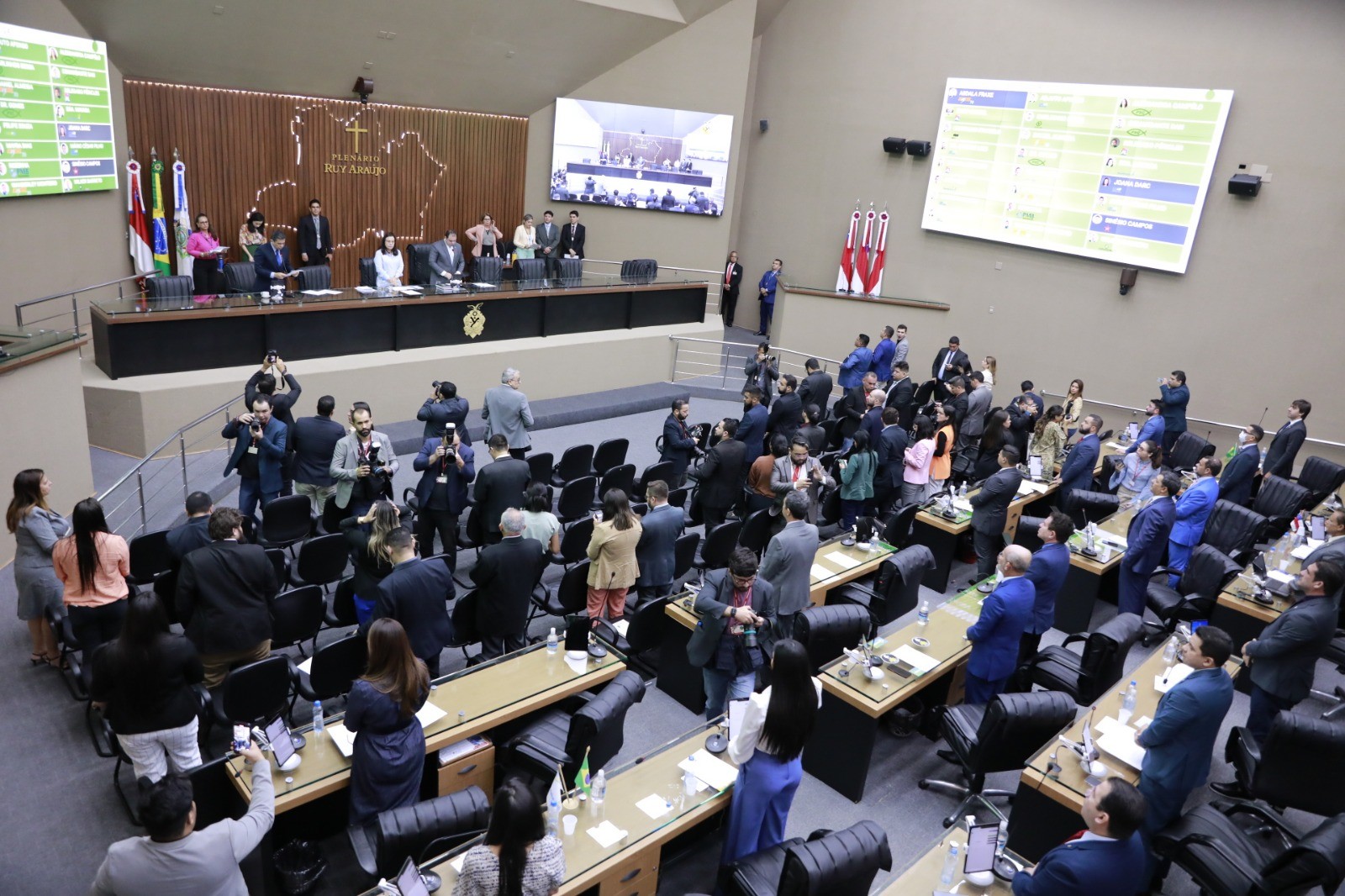
A review of legislative activity in the Amazonas State Assembly (Aleam) for the first half of 2026 reveals that State Deputy Cristiano D'Angelo (MDB) made no speeches on the floor during that period. In contrast, Comandante Dan (Republicanos) was the most active, delivering 79 speeches. Other prominent speakers included Wilker Barreto (PSD) with 36 speeches and Sinésio Campos (PT) with 35. João Luiz (Republicanos), a government base member, ranked fourth among the most active with 31 speeches, followed by Alessandra Campelo (PSD). At the lower end, Wanderley Monteiro (União Brasil) made only two speeches, while Daniel Almeida (Avante), Abdala Fraxe (Avante), and Felipe Souza (Podemos) each delivered four. Roberto Cidade (União Brasil) also had four speeches before leaving the Aleam in April to serve as interim Governor of Amazonas. The analysis also examined the distribution of project rapporteurships, a role involving the analysis of proposed legislation. Delegado Péricles (PL) led this category with 163 reported matters, followed by Carlinhos Bessa (União Brasil) with 156, and Felipe Souza (Podemos) with 127. Alessandra Campelo (PSD) reported 109 projects, and Dr. George Lins (União Brasil) reported 88. The acting president of Aleam, Adjuto Afonso (União Brasil), explained that rapporteurship concentration often occurs as commission presidents expedite legislative processing. Deputies with fewer rapporteurships included Mário César Filho (União Brasil) and Adjuto Afonso himself, with three each, as his role as Assembly President precluded him from reporting projects. Cabo Maciel (PL) and Cristiano D'Angelo (MDB) each had eight rapporteurships, and Joana D'Arc (União Brasil) registered 12.
This legislative activity report highlights significant disparities in parliamentary engagement and workload distribution within the Amazonas State Assembly during the first half of 2026. The data suggests potential inefficiencies or strategic choices influencing which deputies actively participate in floor debates and assume responsibility for legislative analysis. The concentration of rapporteurships among a few members, while attributed to procedural acceleration by commission presidents, raises questions about equitable distribution of legislative duties and potential bottlenecks. It is crucial to examine the incentive structures and governance mechanisms that lead to such uneven engagement, considering how these patterns might affect legislative responsiveness and representation. Future analysis could explore the correlation between deputy activity levels and their respective party affiliations or committee assignments, and whether these disparities align with broader public expectations for legislative oversight and action.
AI-generated to prompt reflection — not editorial opinion, not advice, not a statement of fact. How this works.