AMD Ryzen AI Halo Review: A Local AI Solution with Performance Limitations
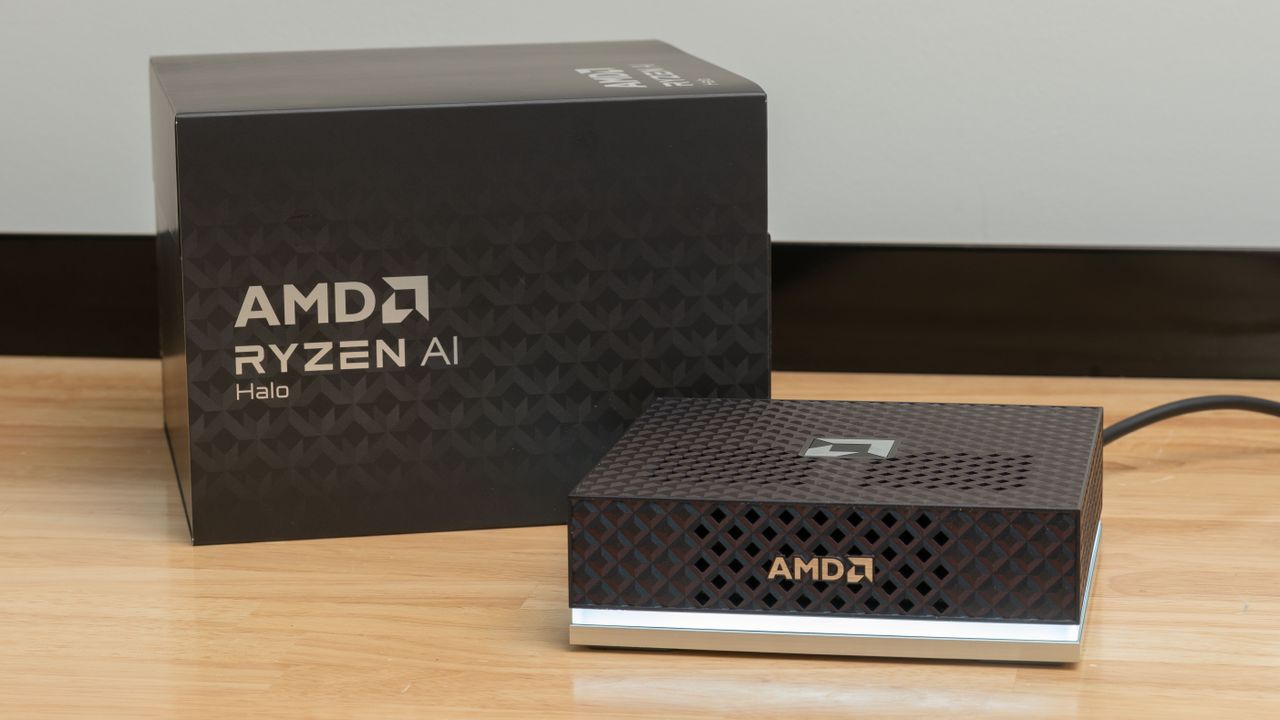
AMD has introduced the Ryzen AI Halo, a complete local AI system designed for users exploring artificial intelligence applications. This hardware solution comes with dedicated first-party software, useful utilities, and extensive documentation, aiming to simplify the process for local AI enthusiasts. However, the system's performance, particularly concerning the Ryzen AI Max+ 395 (Strix Halo) SoC, falls short when compared to Nvidia's GB10. Additionally, the Ryzen AI Halo is considered expensive relative to its current capabilities and offerings. This positions the device as a potentially useful tool for specific local AI tasks but highlights areas where its performance and value proposition could be improved.
The introduction of the Ryzen AI Halo signifies AMD's strategic move to provide integrated, turn-key solutions for local AI development, aiming to democratize access to AI hardware and software. While this approach offers convenience and dedicated support, the current performance gap with established competitors like Nvidia's GB10, coupled with a high price point, presents a significant market challenge. Future iterations will need to demonstrate substantial performance gains and a more compelling value proposition to capture market share. The long-term success of such localized AI hardware will depend on its ability to efficiently handle increasingly complex AI models and its integration into broader AI development ecosystems, potentially influencing the decentralization of AI computation.
AI-generated to prompt reflection — not editorial opinion, not advice, not a statement of fact. How this works.