Amsterdam's Canal Parade for WorldPride proceeds smoothly amid large crowds and minor disruptions
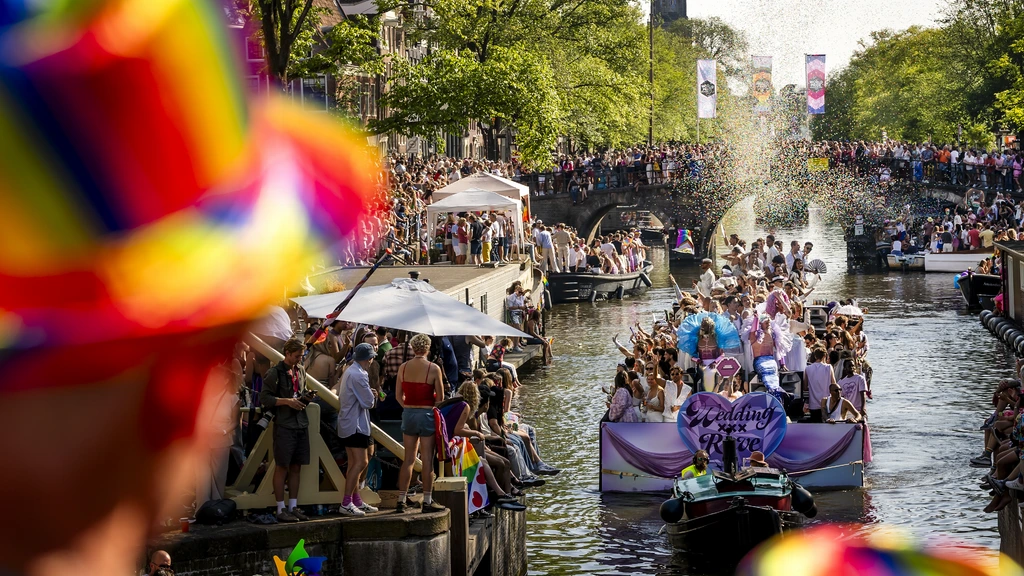
Amsterdam's Canal Parade, a central event for WorldPride, concluded without major incidents, drawing hundreds of thousands of visitors. Eighty boats navigated the city's canals, culminating in the Prinsengracht where special stands were erected for the international LGBTQ+ community event. The organization described the atmosphere as "incredibly good" despite the large turnout, with spokesperson Martijn Albers highlighting the parade as a significant showcase of Dutch Pride celebrations that impressed international attendees. The parade's theme was "unity," with various organizations conveying messages of solidarity. The literary world, through "De Boekenboot," advocated for queer stories and author freedoms, while the municipality of Amsterdam celebrated the 25th anniversary of same-sex marriage legalization. Prime Minister Jetten participated in a portion of the route, emphasizing the importance of continued protest for LGBTQ+ acceptance globally and in the Netherlands, noting that such acceptance is under significant pressure worldwide. Minister Yesilgöz and Amsterdam Mayor Halsema were also present, with Halsema noting extensive security preparations in response to a recent attack at a Pride event in Berlin. Despite these measures, pro-Palestinian demonstrators caused minor disruptions, attempting to block boats and spray graffiti on a Deutsche Bank vessel, citing the bank's investments in companies linked to the Israeli military. One demonstrator was arrested for failing to identify themselves. Similar Pride celebrations occurred across Europe, with large turnouts in Hamburg, Bonn, and Brighton, many also acknowledging the attack in Berlin. The festivities in Amsterdam continue, including a performance by Madonna at the Afas Live venue.
The Canal Parade, serving as a significant cultural and political statement for WorldPride, successfully navigated large crowds and a complex security environment. The event highlights the ongoing tension between celebratory expression and the need for robust safety protocols, particularly in light of international security concerns. The minor disruptions by pro-Palestinian demonstrators, while not derailing the main event, underscore the intersectionality of global political issues with cultural celebrations. Future events may need to consider enhanced communication strategies to address the motivations of protest groups preemptively, balancing freedom of expression with public safety and the event's core message of unity and acceptance. The participation of high-ranking government officials signals continued state support for LGBTQ+ rights, yet the prime minister's remarks also point to the persistent challenges faced by the community globally, suggesting that such parades remain critical platforms for advocacy as much as celebration.
AI-generated to prompt reflection — not editorial opinion, not advice, not a statement of fact. How this works.