Amthor Appointed State Minister for Federal-State Cooperation Following Spahn's Resignation
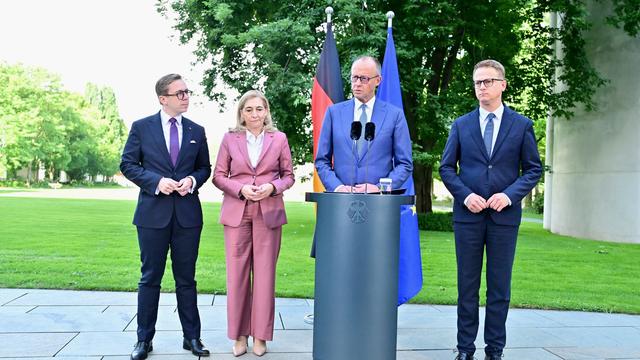
Following the resignation of Jens Spahn, Philipp Amthor has been appointed as the new State Minister for Federal-State Cooperation. This significant personnel change within the federal government comes at a critical juncture, as effective coordination between federal and state authorities is paramount for implementing national policies and addressing complex challenges. Amthor, who previously held a position in the Bundestag, is expected to bring his legislative experience to this new role. His appointment signals a focus on strengthening intergovernmental relations and ensuring seamless collaboration across different levels of governance. The transition aims to maintain stability and continuity in federal-state partnerships, particularly in areas requiring joint decision-making and resource allocation. This move is seen as an effort to streamline communication and enhance the efficiency of policy execution. The specific portfolio of the State Minister for Federal-State Cooperation involves mediating between the federal government and the 16 German states (Länder) on a wide range of issues, including legislative proposals, administrative procedures, and financial matters. Amthor's mandate will likely involve navigating diverse state interests and fostering consensus-building to achieve common objectives. His predecessor, Spahn, had been instrumental in various intergovernmental initiatives, and his departure creates a void that Amthor is now tasked with filling.
The appointment of Philipp Amthor as State Minister for Federal-State Cooperation following Jens Spahn's resignation highlights the ongoing importance of intergovernmental coordination within Germany's federal system. This role is crucial for navigating the complex landscape of shared responsibilities between the federal government and the Länder. Amthor's transition into this position suggests a potential emphasis on legislative strategy and consensus-building in federal-state relations. The effectiveness of this appointment will be measured by its ability to foster smoother policy implementation and address potential friction points between different levels of government, particularly in the face of evolving societal and economic pressures. Future challenges will likely involve adapting intergovernmental frameworks to new technological paradigms and ensuring equitable distribution of resources and policy outcomes across all states.
AI-generated to prompt reflection — not editorial opinion, not advice, not a statement of fact. How this works.