Ancient Agora's Transformation: New Narrative Through Restoration
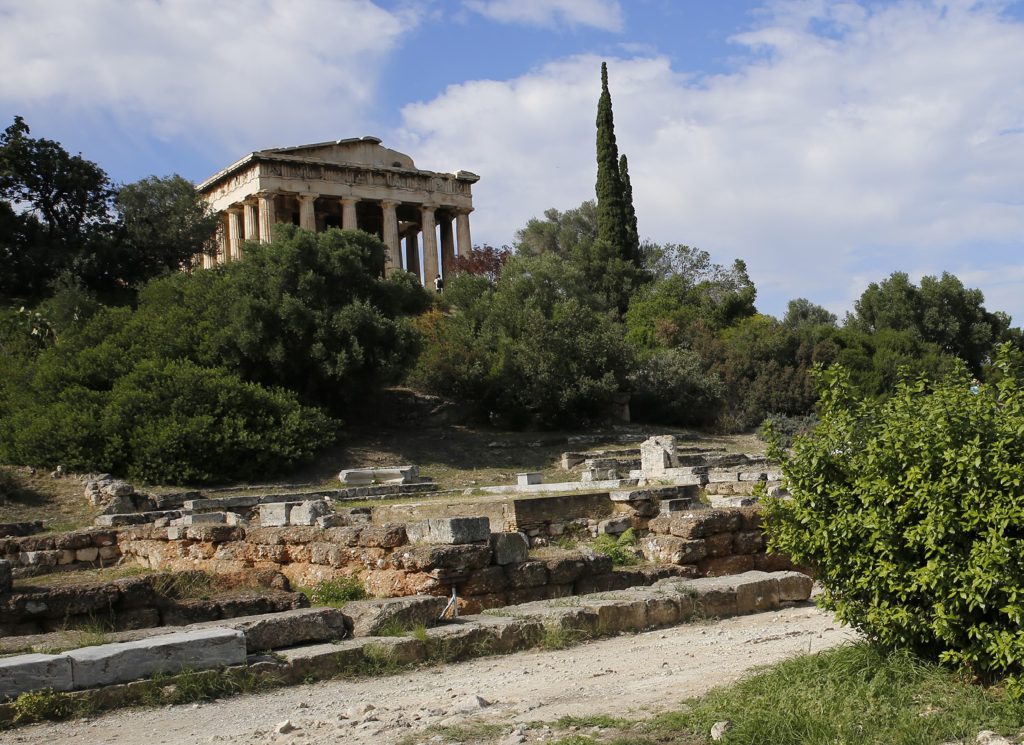
Visitors to the Ancient Agora, the most significant public space of ancient Athens, are now invited to re-interpret its historical narrative. Recent interventions, completed and unveiled to the public yesterday, aim to alter not only the physical appearance of the archaeological site but also the way the space itself communicates its history. The project's core focus has been the restoration of the Stoa of Attalos, a key element in understanding the Agora's past. This initiative seeks to provide a more immersive and informative experience for visitors, allowing them to engage more deeply with the remnants of Athenian democracy and daily life. The restoration efforts are designed to highlight the architectural and social significance of the Agora, offering a fresh perspective on its enduring legacy. The aim is to bridge the gap between the ancient past and the present, making the site more accessible and understandable to a contemporary audience. This transformation signifies a renewed effort to preserve and present Greece's rich historical heritage.
The restoration of the Ancient Agora represents a strategic effort to recontextualize historical sites for contemporary audiences. By focusing on narrative reconstruction alongside physical restoration, authorities aim to enhance visitor engagement and educational impact. This approach acknowledges that historical interpretation is dynamic, influenced by presentation and accessibility. The project's success will hinge on its ability to balance scholarly accuracy with public appeal, ensuring that the site's historical integrity is maintained while its story resonates with a global audience. In the long term, such initiatives can foster greater appreciation for cultural heritage and its relevance in an increasingly globalized world, potentially influencing tourism and educational policies.
AI-generated to prompt reflection — not editorial opinion, not advice, not a statement of fact. How this works.