Ancient Aquiry Civilization in Amazon: Millions Lived in Acre, New Study Reveals
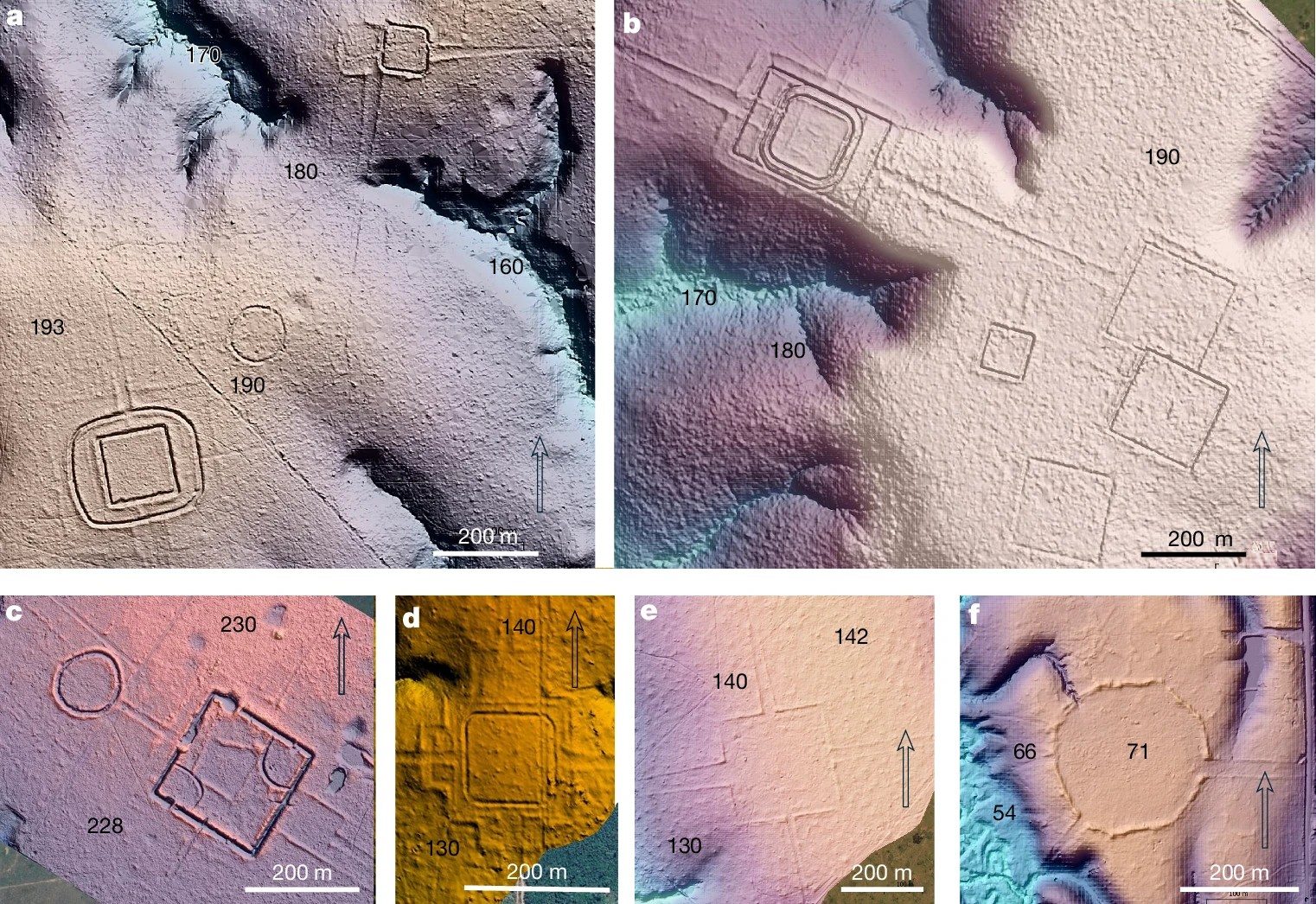
A groundbreaking study, published in the journal 'Nature,' has uncovered evidence of the Aquiry civilization, a complex society that inhabited the southwestern Amazon, specifically the border region of Acre and Amazonas, between 600 B.C. and 850 A.D. Scientists estimate that between 1.25 million and 3 million people lived in this area, challenging previous assumptions about the Amazon's population density and cultural sophistication. The civilization, named after the indigenous term for the Acre River, constructed large political and ritual centers across approximately 183,000 square kilometers, an area comparable to the size of Paraná state. Their legacy is visible in numerous geoglyphs—enigmatic geometric figures etched into the ground, formed by deep trenches connected by straight pathways. Researchers have identified over 400 well-preserved sites, but they hypothesize that as many as 20,000 ancient ceremonial centers may have existed in the region. The largest discovered site spans 50 hectares, equivalent to 70 football fields. The Aquiry people significantly altered the Amazonian landscape, clearing bamboo forests for agriculture, cultivating crops like corn, squash, and cassava, and managing valuable tree species. This human impact on the environment was far greater than previously understood, potentially influencing the region's carbon balance and necessitating consideration in future climate models. Advanced Lidar technology, an aerial laser mapping system, was crucial in revealing these structures hidden beneath the dense forest canopy. The geometric sites and pathways likely served as social hubs for inter-community relations, political decision-making, and displays of generosity by chieftains, hosting ceremonies involving rituals, music, feasts, and athletic competitions. While the Aquiry left no stone ruins due to the lack of suitable materials, their geoglyphs offer insights into their societal organization, suggesting a network of diverse communities rather than a single unified kingdom. A significant mystery remains regarding their disappearance between 850 and 1000 A.D., a period that also saw the gradual decline of the Maya civilization in Central America, with the causes for both collapses still under debate.
This research significantly revises our understanding of pre-Columbian Amazonian societies, demonstrating a far greater population density and environmental impact than previously theorized. The discovery of the Aquiry civilization, characterized by extensive earthworks and geoglyphs, highlights the sophisticated organizational capabilities of these ancient peoples. The study's reliance on Lidar technology underscores the potential for advanced remote sensing to uncover hidden historical landscapes. The Aquiry's deliberate alteration of vegetation and promotion of specific tree species reveals a proactive approach to landscape management, suggesting that the Amazon was not a pristine wilderness but a heavily managed environment. The unresolved mystery of their disappearance, coinciding with other major societal collapses globally, prompts reflection on the complex interplay of environmental, social, and political factors that can lead to the decline of complex civilizations. Future research may focus on understanding the specific drivers of this collapse and its implications for contemporary environmental stewardship and societal resilience in the face of large-scale environmental change.
AI-generated to prompt reflection — not editorial opinion, not advice, not a statement of fact. How this works.
