Ancient Fossil Reveals Sea Monsters Devouring Each Other
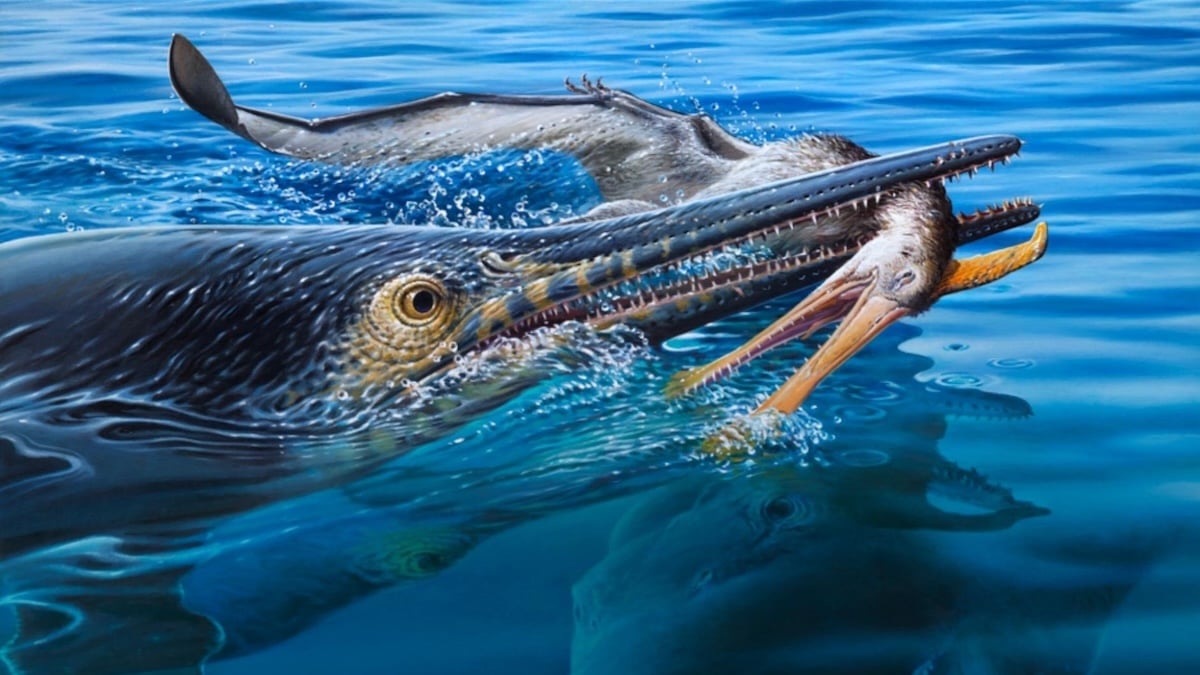
A remarkable fossil discovery has unearthed evidence of ancient marine predators consuming one another. Dubbed the 'Turducken' fossil, this specimen showcases a large predatory fish with another smaller fish inside its stomach, which in turn contains an even smaller fish. This unique find offers a rare glimpse into the feeding behaviors and ecological dynamics of prehistoric marine life. The fossil provides direct evidence of a complex food chain, where larger species preyed upon smaller ones, even within the predatory ranks. Researchers are analyzing the fossil to understand the specific species involved and the timeline of this predatory event. The discovery highlights the intensity of competition and predation that likely characterized ancient ocean ecosystems. It serves as a stark reminder that even apex predators were subject to the constant struggle for survival in their environment. Further study of this fossil promises to shed more light on the evolutionary pressures that shaped these ancient sea monsters.
This fossil discovery offers a direct, tangible insight into the brutal realities of prehistoric food webs, illustrating a stark hierarchy of predation. The 'Turducken' specimen, by capturing a multi-layered act of consumption, provides empirical data on predator-prey dynamics that are typically inferred from less complete evidence. Examining such findings through a long-term lens, one can consider how these intense competitive pressures may have driven evolutionary adaptations in marine species over millennia. Understanding these ancient ecological structures can inform contemporary conservation efforts by highlighting the long-standing fragility and interconnectedness of marine ecosystems, suggesting that disruptions at any level can have cascading effects.
AI-generated to prompt reflection — not editorial opinion, not advice, not a statement of fact. How this works.