Ancient Greenland Shark Found in Ireland Holds Secrets to Longevity
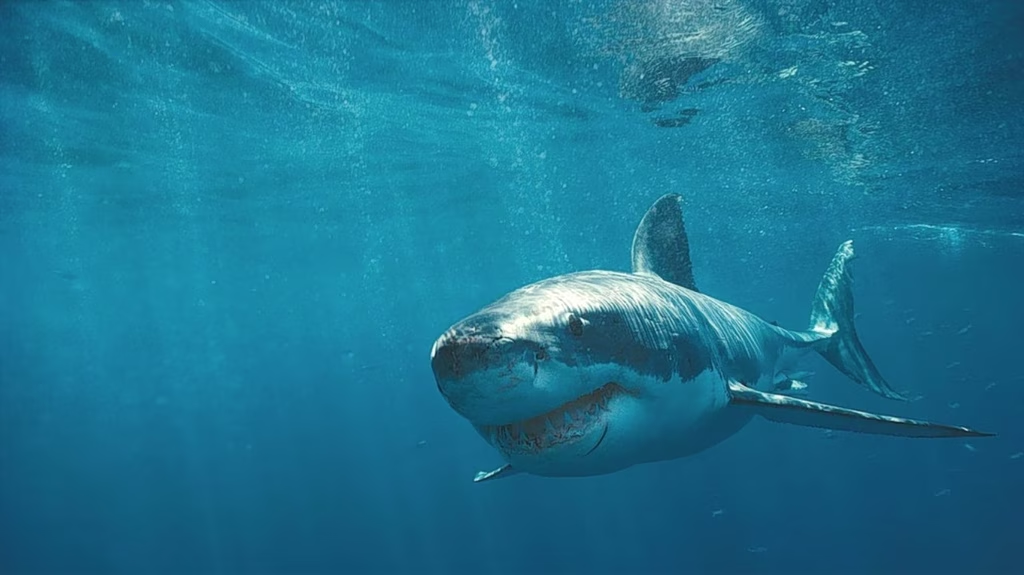
A deceased Greenland shark that washed ashore in Ireland is providing scientists with invaluable insights into the secrets of extreme longevity. This particular shark, estimated to be from the era of Shakespeare, represents a remarkable opportunity to study the biological mechanisms behind its exceptional lifespan. Greenland sharks are known to be the longest-living vertebrates on Earth, with some individuals believed to live for centuries. Researchers are hopeful that studying the genetic makeup and physiological processes of this specimen will unlock clues to aging and potentially offer pathways for understanding human longevity. The discovery offers a unique window into the life history and adaptations of these elusive deep-sea creatures. Scientists aim to decipher the biological factors that allow these sharks to survive for such extended periods, potentially leading to breakthroughs in age-related research.
The discovery of a long-lived Greenland shark presents a scientific opportunity to investigate the biological underpinnings of extreme longevity. Studying the genetic and physiological characteristics of this ancient vertebrate could offer insights into aging processes, potentially informing future research into age-related diseases and human lifespan. Understanding the evolutionary adaptations that enable such extended life in a challenging environment may reveal novel biological pathways. This research aligns with broader scientific goals of deciphering the fundamental mechanisms of aging and healthspan, with potential long-term implications for public health and biotechnology.
AI-generated to prompt reflection — not editorial opinion, not advice, not a statement of fact. How this works.