Ancient Persian Inscription Hidden in Rio's Municipal Theater Deciphered After Over a Century
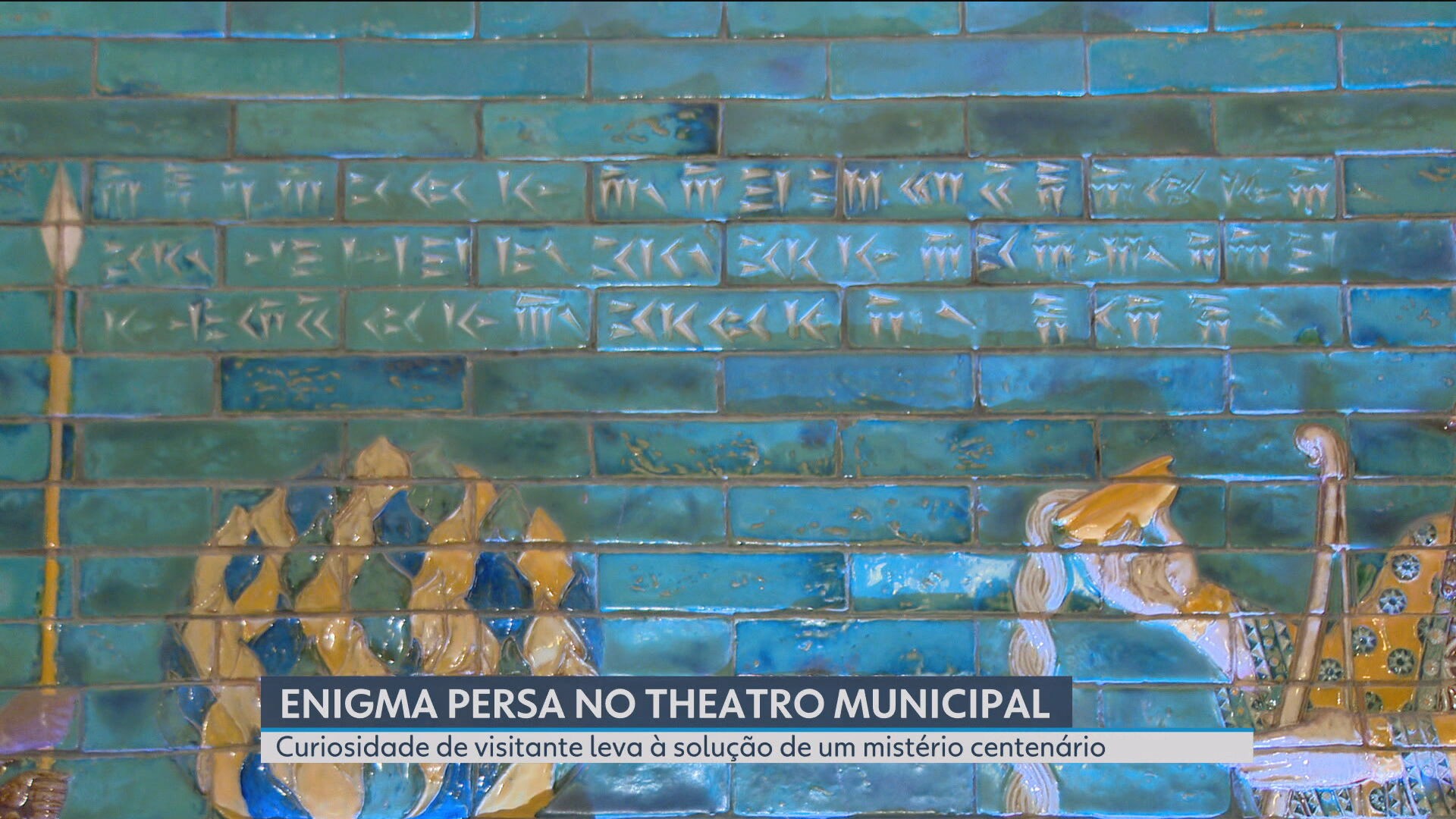
An ancient Persian inscription in cuneiform script, hidden for nearly 117 years on a wall in the Assyrian Hall of Rio de Janeiro's Municipal Theater, has finally been deciphered. The inscription, present since the theater's inauguration in 1909, references a palace of the Persian Empire. The mystery was solved by two recently arrived university professors: Alex Mazzanti, a Latin professor at UFRJ, and Matheus Treuk, an archaeology professor at Uerj. This discovery coincides with the theater's anniversary and reveals an unprecedented link between a major Brazilian cultural heritage site and ancient Persia. The Municipal Theater, influenced by French Belle Époque aesthetics and Parisian Opera, features an Assyrian Hall with mixed references to ancient civilizations, particularly Assyria and Persia. Despite its name, specialists note a stronger Persian influence, including columns inspired by the Persian royal audience hall, the Apadana, and motifs found in late 19th-century Middle Eastern archaeological excavations. Professor Treuk described the hall as a "reinterpretation of a Persian palace." The inscription remained untranslated for decades, despite the hall hosting various events and functions, including performances by Pixinguinha and serving as a museum. Professor Mazzanti's curiosity was piqued during a guided tour when he noticed the cuneiform text and learned it was undeciphered. Having studied ancient Persian previously, he collaborated with Professor Treuk, an expert in ancient Near Eastern archaeology and cuneiform script, to translate it. The deciphered text reads: "From the Apadana of Artaxerxes, great king, king of kings, son of King Darius." Researchers believe the inscription was an adaptation of an ancient phrase, likely created by the French company responsible for the hall's decoration, which had participated in European exhibitions showcasing Persian artifacts. This adaptation, adding "from the Apadana," indicates the inspiration source, though the exact phrasing is not found on known Persian monuments. The discovery highlights the Assyrian Hall as a unique and permanent preservation of Persian-inspired architecture, unlike temporary European exhibitions from the same era. The translation enriches the understanding of the theater's history and the motivations behind its creation, solidifying its place in national heritage.
The decipherment of the ancient Persian inscription within Rio de Janeiro's Municipal Theater offers a fascinating case study in cultural exchange and historical preservation. The inscription, a deliberate artistic and historical reference rather than a direct historical document, highlights how Belle Époque-era European fascination with ancient Eastern civilizations manifested in architectural design. The preservation of this Persian-inspired hall for over a century, especially when similar European installations were temporary, underscores the enduring value of tangible cultural heritage. This event prompts reflection on how historical narratives are constructed and transmitted through art and architecture, and the role of academic research in uncovering and contextualizing these layers of meaning. Future endeavors might explore the broader implications of such cross-cultural artistic adaptations and their role in shaping national identity and international cultural understanding in the digital age.
AI-generated to prompt reflection — not editorial opinion, not advice, not a statement of fact. How this works.