Ancient Quasars Discovered at Universe's Dawn Astonish Scientists
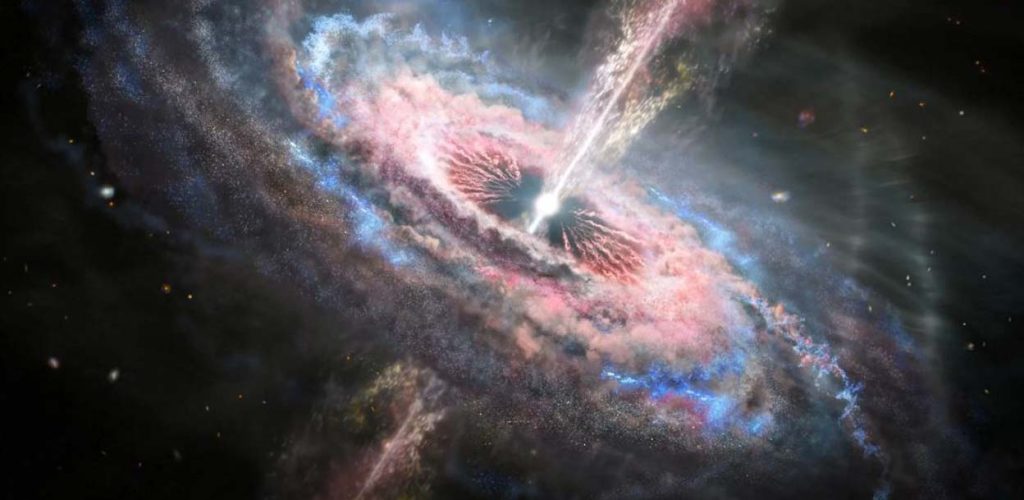
Astronomers have discovered 31 ancient quasars, objects that formed very early in the universe's history. These quasars are providing unprecedented insights into the conditions of the cosmos shortly after the Big Bang. The discovery challenges existing models of early galaxy formation and the growth of supermassive black holes. Researchers are particularly intrigued by the sheer number and brightness of these quasars, suggesting that the early universe may have been more active and structured than previously thought. The findings are expected to prompt a re-evaluation of cosmological theories. Further observations are planned to gather more data on these distant objects. This discovery represents a significant step forward in our understanding of the universe's formative years. The implications for astrophysics are profound, potentially rewriting textbooks on cosmic evolution.
The discovery of numerous ancient quasars challenges current cosmological models regarding the early universe's structure and the formation of supermassive black holes. This finding suggests that the processes driving galaxy and black hole evolution may have been more rapid or efficient in the nascent cosmos than previously understood. Future research will likely focus on refining these models to account for the observed phenomena, potentially revealing new physics or a deeper understanding of the conditions that led to the universe we observe today. The implications for understanding the timeline of cosmic evolution and the interplay between dark matter, baryonic matter, and black hole growth are significant.
AI-generated to prompt reflection — not editorial opinion, not advice, not a statement of fact. How this works.