Ancient Quasars Discovered Challenge Early Universe Formation Theories
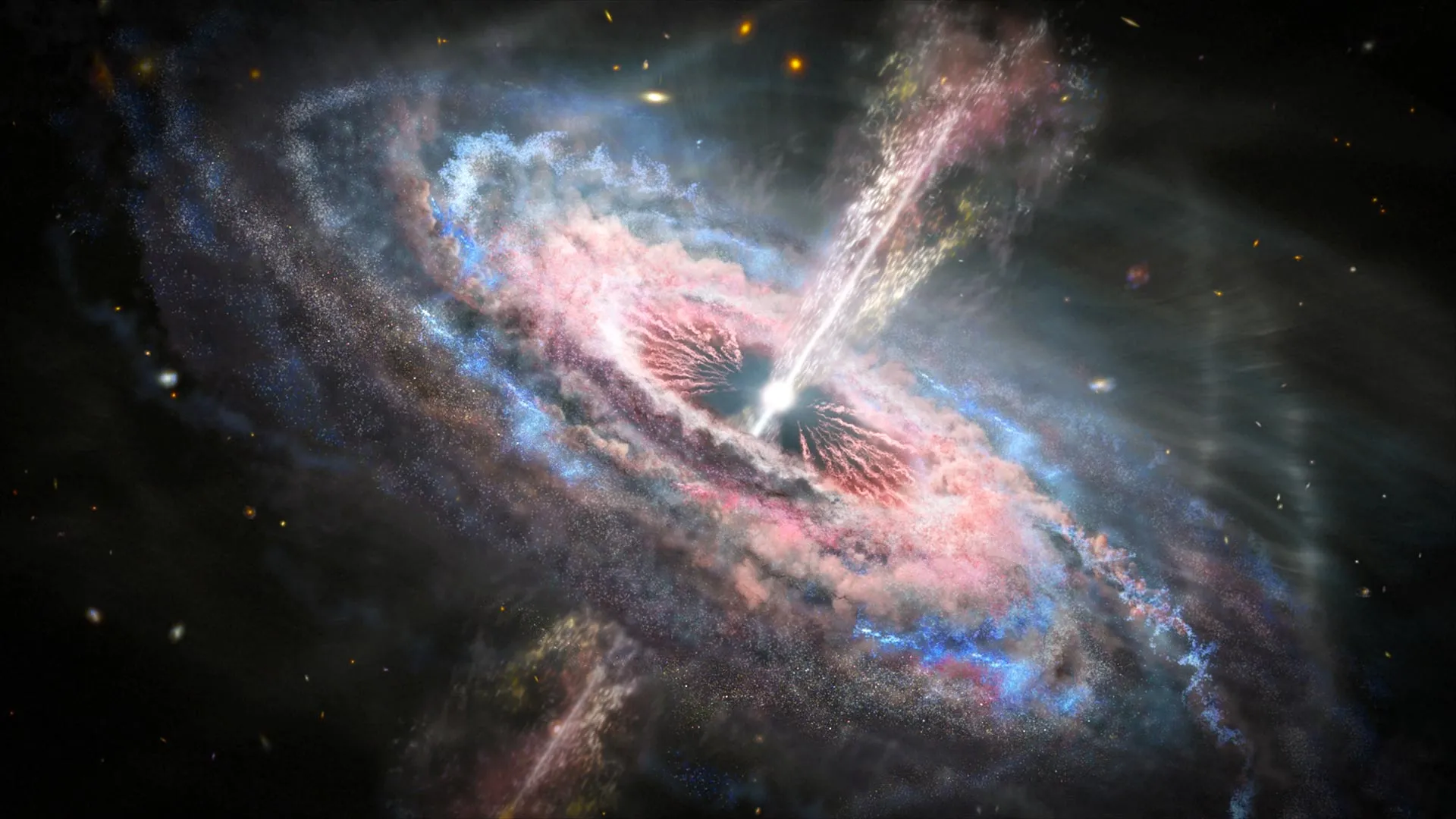
Astronomers have identified 31 ancient quasars, including the two earliest ever detected. These quasars date back to approximately 670 million years after the Big Bang. They are powered by supermassive black holes with masses billions of times that of our Sun. The existence of these massive black holes so early in the universe's history presents a significant challenge to current scientific models of black hole formation. Scientists are re-evaluating how such enormous structures could have developed so rapidly in the nascent cosmos.
The discovery of these exceptionally old and massive quasars suggests that the processes governing black hole growth in the early universe may be more efficient or operate differently than currently understood. This finding prompts a re-examination of cosmological models, potentially requiring adjustments to theories on early galaxy formation and the seeding of supermassive black holes. Future research will likely focus on refining simulations and observational techniques to better comprehend the conditions that allowed for such rapid cosmic structural development, offering insights into the universe's formative epochs and the fundamental physics at play.
AI-generated to prompt reflection — not editorial opinion, not advice, not a statement of fact. How this works.