Ancient Stone or Timber Circle Unearthed in Scotland May Be Monument
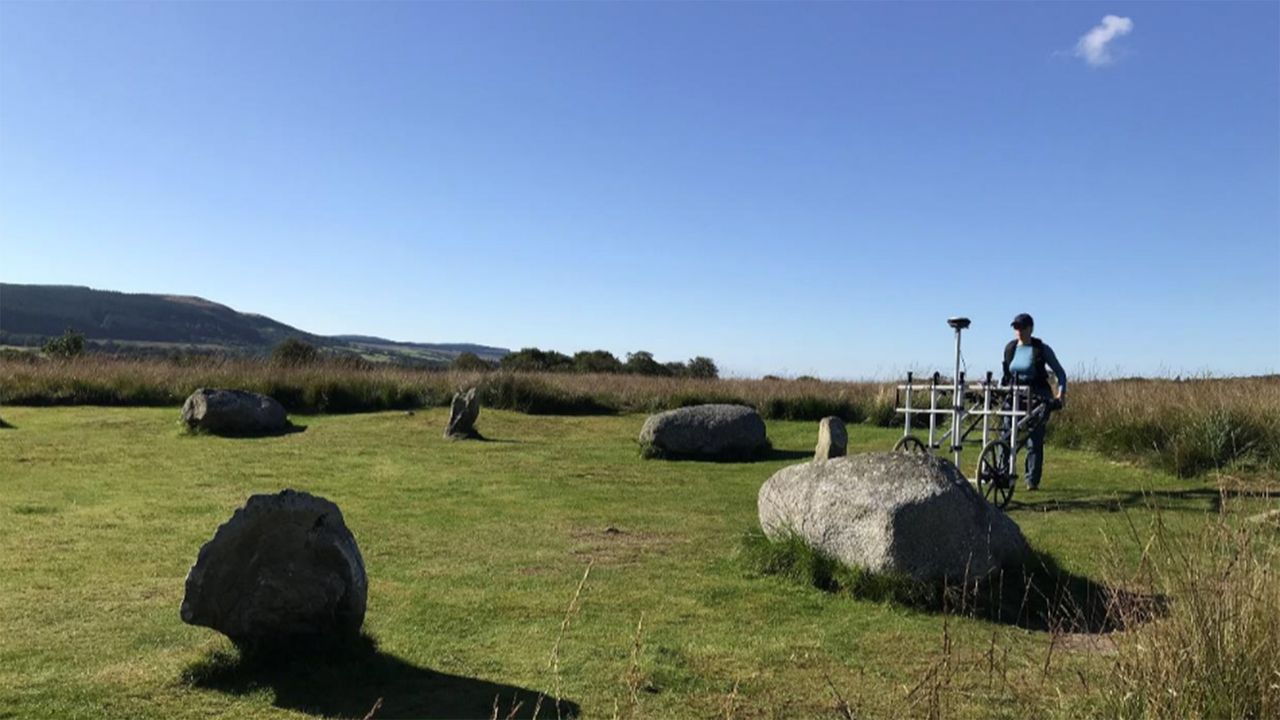
Archaeologists have discovered a potential ancient monument hidden beneath peat at Machrie Moor in Scotland. This newly detected ring of stones or timbers could represent a previously unknown Neolithic or Bronze Age structure. The discovery was made during a geophysical survey of the area. Machrie Moor is already known for its significant prehistoric sites, including standing stones and stone circles dating back thousands of years. This new find suggests that the landscape may hold even more secrets from Scotland's early history. Further investigation will be required to determine the exact nature and age of the ring. Researchers are hopeful that this discovery will shed new light on the activities and beliefs of people living in the region during the Neolithic and Bronze Ages. The potential scale of the monument is being compared to Stonehenge, indicating its possible importance.
The discovery of a potential prehistoric monument at Machrie Moor highlights the ongoing potential for uncovering significant historical sites through advanced geophysical survey techniques. This find underscores the importance of preserving peatlands, which can act as excellent archives of past human activity and environmental conditions. Future research will likely focus on understanding the monument's construction, purpose, and relationship to other known sites in the area. The comparison to Stonehenge suggests a potentially large-scale communal or ritualistic function, prompting questions about the social organization and technological capabilities of the people who built it. Understanding these ancient structures can offer insights into long-term societal development and the evolution of human interaction with the landscape.
AI-generated to prompt reflection — not editorial opinion, not advice, not a statement of fact. How this works.