Ancient 'Warrior Prince' Tomb with Chariot Unearthed in Italy
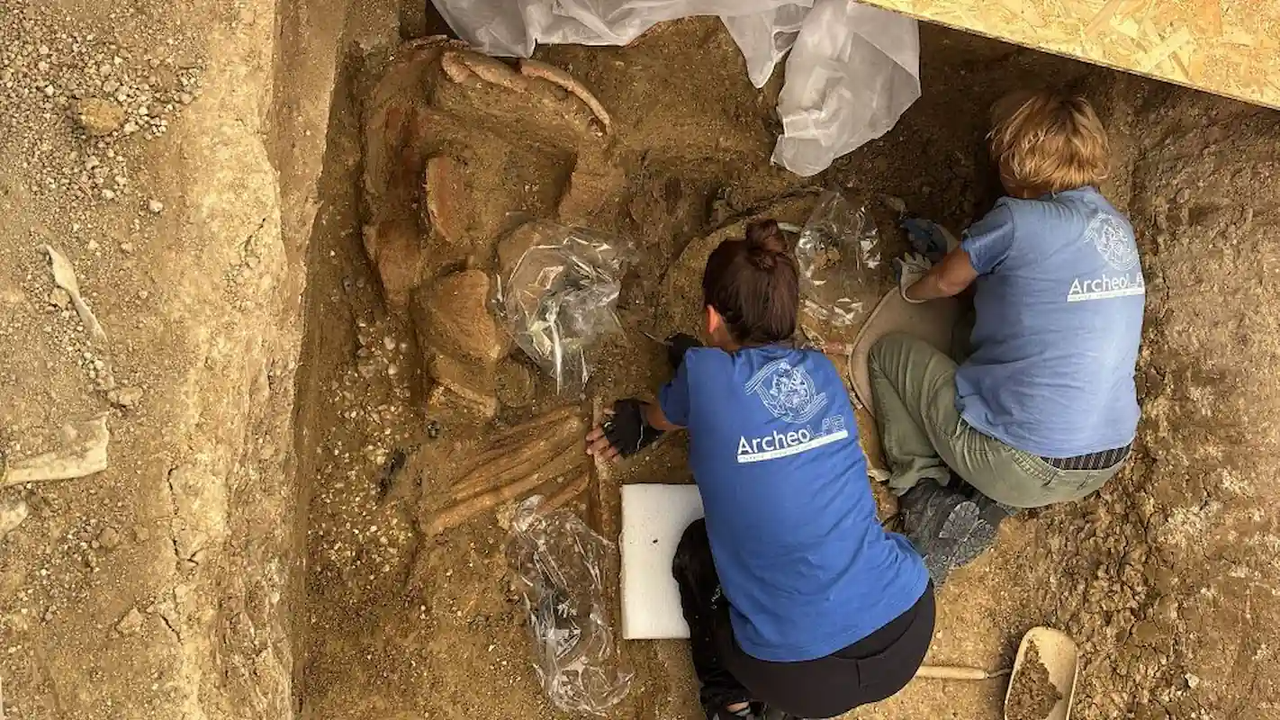
Archaeologists have unearthed a 2,500-year-old tomb belonging to a 'warrior prince' on Italy's Adriatic coast. The discovery was made at a royal burial ground of the Piceni, an ancient and historically obscure pre-Roman civilization. The tomb contained significant artifacts, including a chariot and a helmet, indicating the high status of the individual interred. This excavation offers a rare glimpse into the culture and practices of the Piceni people, who inhabited the region before the rise of Rome. The findings contribute valuable new information to the limited historical understanding of this mysterious civilization. Further study of the tomb and its contents is expected to shed more light on their society, beliefs, and potential connections with other contemporary cultures.
The discovery of this 2,500-year-old Piceni tomb, complete with a chariot and helmet, provides a significant archaeological data point for understanding pre-Roman Italian societies. The limited historical documentation of the Piceni necessitates reliance on such material evidence to reconstruct their cultural, social, and military structures. Future analysis will likely focus on comparative studies with other Italic peoples to identify patterns of influence and distinctiveness. Understanding the resource allocation for such elaborate burials can also offer insights into the economic and political organization of the Piceni, potentially revealing hierarchies and trade networks that were previously unknown. This find underscores the ongoing potential for major historical revelations through meticulous archaeological work, challenging existing narratives and enriching our comprehension of ancient Europe.
AI-generated to prompt reflection — not editorial opinion, not advice, not a statement of fact. How this works.