Ancient Wooden Piles Suggest Leiden is Centuries Older Than Previously Believed
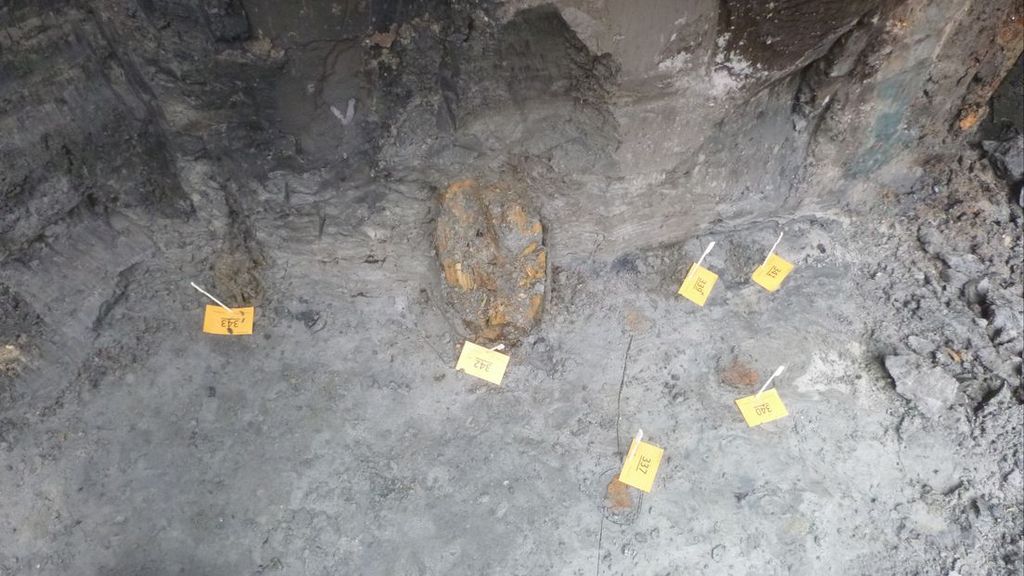
Recent archaeological excavations beneath an Albert Heijn supermarket in the heart of Leiden, Netherlands, have unearthed approximately forty ancient wooden piles, potentially rewriting the city's history. A significant portion of these piles have been dated to the period between 650 and 900 AD, challenging the long-held assumption that the area was not settled until around the year 1000 AD. Archeologists from Erfgoed Leiden en Omstreken described the findings as "spectacular" and transformative for the understanding of Leiden's earliest habitation. The piles were discovered during the construction of a bicycle cellar at the Breestraat location. Their presence provides strong evidence of human settlement on the southern bank of the Rhine River during the early Middle Ages. This location, although slightly elevated, was still prone to regular flooding from the Rhine. Archeologists suggest that a major flood eventually led to the abandonment of this southern bank settlement, with re-settlement not occurring until the twelfth century, after which it became permanent. The discovery could make the city one to three and a half centuries older than previously thought. While earlier excavations had found wooden piles dating back to 1000 AD, the new finds push the timeline back considerably. The earliest written mention of Leiden dates to around 850 AD in the Sint-Maartensregister, which references three settlements named 'Leython,' meaning 'by the waters.' Historians had long suspected these Leythons were located near modern-day Leiden, and these new findings appear to corroborate that theory. Despite this, historical and archaeological evidence from this very early period remains scarce. A clearer picture of Leiden emerges only from the 12th century onwards, depicting a small settlement on the Rhine's south bank that rapidly grew into a city on both sides of the river, eventually receiving city rights. The impact of these discoveries on the planned opening of the bicycle cellar, scheduled for the end of this year, is currently unknown.
The discovery of early medieval wooden piles in Leiden significantly predates previously accepted settlement timelines, suggesting a more continuous and earlier habitation of the region. This finding prompts a re-evaluation of historical narratives and the factors influencing urban development along river systems. The presence of settlement on a flood-prone bank highlights the adaptive strategies of early communities and the inherent risks they managed. Future research should focus on understanding the resilience and eventual displacement of these early inhabitants, as well as the environmental conditions that shaped their existence. This historical revisionism underscores the dynamic nature of archaeological evidence and its capacity to challenge established historical frameworks, urging a more nuanced perspective on the origins of European settlements.
AI-generated to prompt reflection — not editorial opinion, not advice, not a statement of fact. How this works.