Andy Burnham Set to Lead Labour, Facing Scrutiny Over Progressive Policies
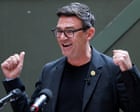
Andy Burnham is poised to officially become the leader of the Labour party during a special conference scheduled for noon. His leadership is already drawing attention and concern from figures within progressive politics. Zack Polanski, the Green party leader, has expressed reservations, noting a shift from earlier optimism. Polanski voiced worries that Burnham's leadership might resemble Keir Starmer's, potentially leading to a continuation of similar policies under a new face. He specifically cited concerns about potential appointments, such as Shabana Mahmood as chancellor, and questioned Burnham's commitment to genuinely progressive measures. While acknowledging Burnham's potential to implement policies like a wealth tax or build council homes, Polanski remains skeptical. He suggests that the Labour party under Burnham might still see widening inequality and may not significantly alter its stance on international issues, such as arms sales to Israel, despite apologies regarding the conflict in Gaza. Polanski contrasted this with the Green party's approach, implying that a vote for Labour under Burnham might offer a diluted version of progressive ideals compared to the Green party's more comprehensive platform.
The political commentary surrounding Andy Burnham's potential leadership of the Labour party highlights a recurring tension between pragmatic governance and ideological purity within left-leaning movements. Observers are scrutinizing whether Burnham's approach will represent a genuine shift towards progressive policies or a continuation of centrist strategies, potentially alienating segments of the party's base. The comparison to Keir Starmer suggests a concern that electoral considerations may lead to a dilution of core principles, particularly on issues of economic inequality and foreign policy. This dynamic underscores the challenge for any party leader in balancing broad electoral appeal with the demands of a diverse and ideologically varied membership, especially in an era where public trust in established political institutions is being tested.
AI-generated to prompt reflection — not editorial opinion, not advice, not a statement of fact. How this works.