Animals Use Unique Adaptations to Beat the Heat
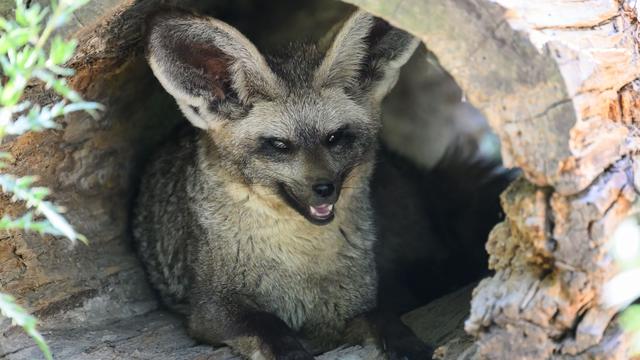
Animals have developed a variety of ingenious methods to cope with rising temperatures and heatwaves. Many mammals, for instance, utilize their ears as a natural cooling system. By flapping their ears, they increase blood flow to the surface, allowing heat to dissipate into the environment. This is particularly effective in animals with large ears, such as elephants and fennec foxes.
Other animals employ different strategies. Elephants, for example, also use their trunks not just for drinking and feeding, but as a sophisticated air conditioning system. They can spray water or mud onto their bodies, which then evaporates, providing a cooling effect. Birds often pant to cool down, similar to dogs, by rapidly breathing in and out to increase airflow over moist membranes in their respiratory systems. Reptiles, being cold-blooded, often seek shade or burrow underground to escape the direct sun and find cooler microclimates. These diverse adaptations highlight the remarkable evolutionary responses of the animal kingdom to environmental challenges like extreme heat.
The observed animal behaviors demonstrate sophisticated biological adaptations to thermal stress, a critical factor in an era of accelerating climate change. These natural cooling mechanisms, evolved over millennia, offer insights into passive cooling technologies that could inspire bio-mimetic engineering solutions for human infrastructure. Understanding the efficiency and energy expenditure of these animal strategies provides a valuable baseline for evaluating the sustainability of human-designed cooling systems. The study of these adaptations underscores the interconnectedness of biodiversity and environmental stability, highlighting the potential systemic risks posed by habitat disruption and temperature extremes to ecological balance.
AI-generated to prompt reflection — not editorial opinion, not advice, not a statement of fact. How this works.
