Anita Garibaldi Bridge Partially Reopens After 10-Day Closure Caused Traffic Jams
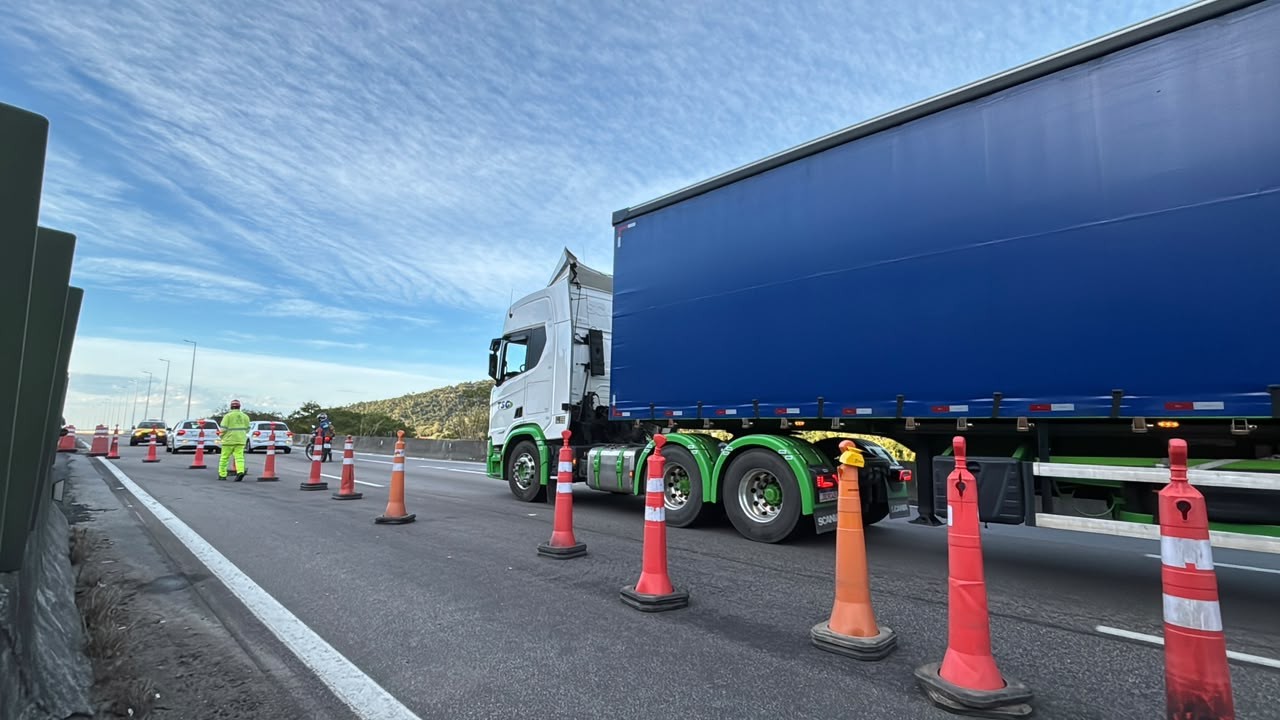
Traffic on the Anita Garibaldi Bridge in Laguna, Santa Catarina, Brazil, has been partially reopened on Sunday, March 19th, following a 10-day closure. The northbound lane resumed operation at 8 AM, and the southbound lane at 10 AM. Vehicle flow is restricted to one lane in each direction (the left lane) on the cable-stayed section. CCR ViaCosteira, the concessionaire managing the stretch of BR-101, has stated that vehicles exceeding 10 tons per axle or wider than 4 meters are still prohibited. The maximum speed limit in the affected area is 50 km/h.
The bridge, a significant landmark and engineering feat as one of Brazil's longest curved cable-stayed bridges, spans 2.8 kilometers and was inaugurated in 2015. The closure was necessitated by an issue with one of the "cordoalhas" (bundles of cables). While the concessionaire is analyzing the problem, it is reportedly progressing towards a resolution. Teams will continue to investigate the exact origin of the issue, which has not yet been identified by engineers. During the closure, traffic on BR-101 was severely impacted, with queues reaching 9 kilometers northbound and 13 kilometers southbound by Friday, March 17th.
The partial reopening of the Anita Garibaldi Bridge addresses immediate traffic congestion following a 10-day closure. The incident highlights the critical need for robust infrastructure maintenance and proactive risk assessment, especially for major transportation arteries. While the concessionaire is working on a resolution, the prior existence of a 2022 document indicating a risk of collapse suggests potential systemic issues in oversight or maintenance protocols that warrant further examination. Moving forward, ensuring transparency in infrastructure inspection reports and establishing clear protocols for addressing identified risks will be crucial for public safety and economic stability. This event underscores the long-term challenges of maintaining aging, complex infrastructure in the face of evolving environmental and usage pressures, demanding continuous investment and technological adaptation to prevent future disruptions and ensure public trust.
AI-generated to prompt reflection — not editorial opinion, not advice, not a statement of fact. How this works.