Ant Group's AI Unit Unveils New Models for Enhanced Robot Perception
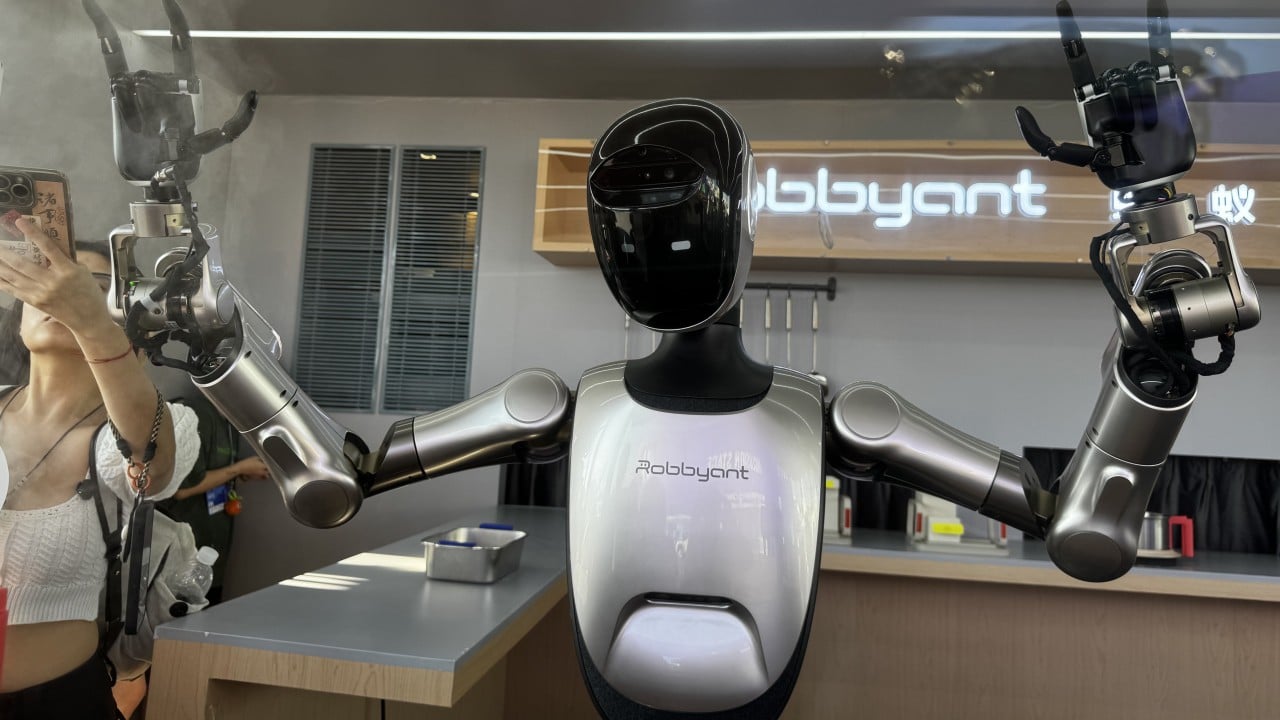
Robbyant, the embodied artificial intelligence division of Chinese fintech firm Ant Group, has announced a significant advancement in robot sensing technology. The company has introduced a new vision model designed to address the persistent issue of robots struggling to accurately detect glass, mirrors, and other transparent materials. This development aims to equip robots with improved spatial awareness and perception capabilities.
On Tuesday, the Hangzhou-based Ant Group unit revealed its latest spatial perception model, named LingBot-Depth 2.0. In addition to this, they also launched a new foundational visual model called LingBot-Vision. These innovations are part of a broader industry effort by AI laboratories to develop the sophisticated "brains" necessary for machines to navigate and interact with complex environments more effectively.
The development of advanced visual perception models like LingBot-Depth 2.0 and LingBot-Vision by Ant Group's Robbyant unit highlights the accelerating race to imbue robots with human-like environmental understanding. Overcoming the challenge of transparent object detection is crucial for enabling robots to operate safely and efficiently in diverse real-world settings, from manufacturing floors to domestic environments. As AI systems become more integrated into physical tasks, the reliability and accuracy of their sensory input will be paramount, influencing the pace of automation and the potential for human-robot collaboration in the coming decade. This advancement could unlock new applications by reducing the risk of errors and accidents caused by misinterpretation of visual data.
AI-generated to prompt reflection — not editorial opinion, not advice, not a statement of fact. How this works.