Antarctica's Doomsday Glacier: Ambitious Plan to Install Seabed Curtains to Slow Melting
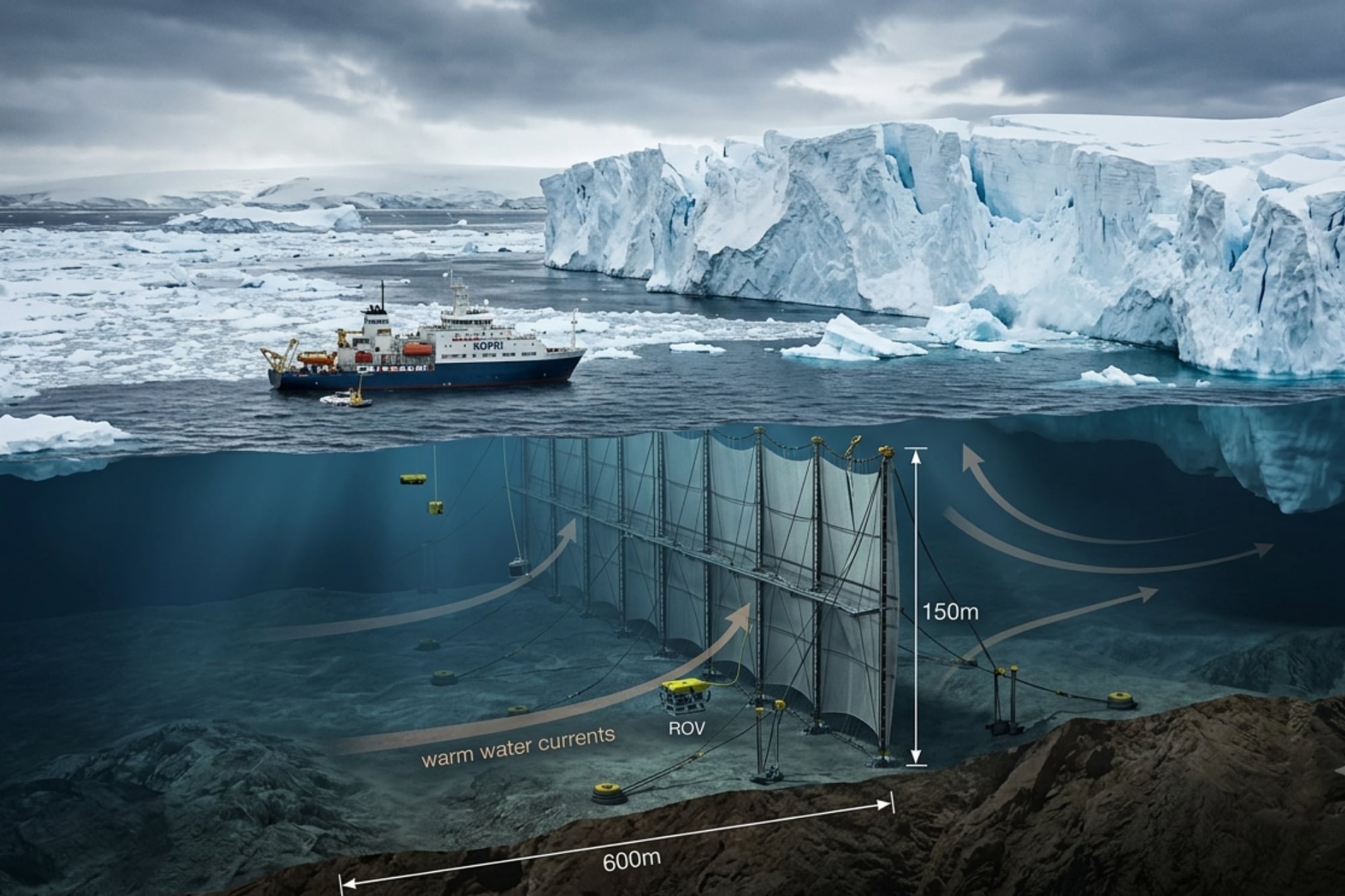
Scientists are proposing an ambitious project to install large curtains on the seabed to slow the melting of Antarctica's Thwaites Glacier, often referred to as the 'Doomsday Glacier.' This massive ice block is currently melting due to rising ocean temperatures, which poses a significant threat of increasing global sea levels. The proposed solution involves deploying curtains that would act as a barrier, preventing warmer ocean water from reaching the glacier's base. The goal is to mitigate the rate of ice loss and buy time for further research and potential long-term solutions. The Thwaites Glacier is particularly vulnerable because its base is grounded on bedrock below sea level, making it susceptible to the warming ocean. Its collapse could lead to a substantial rise in sea levels worldwide. This innovative approach highlights the growing urgency to address the impacts of climate change on critical ice formations. The project is still in its conceptual phase, requiring extensive study and international cooperation for implementation.
The proposal to install seabed curtains near Antarctica's Thwaites Glacier addresses the immediate threat of accelerated melting driven by ocean warming. This intervention represents a geoengineering approach, aiming to mitigate a symptom of climate change rather than its root cause. While potentially offering a temporary reprieve, such measures raise questions about long-term ecological impacts and the sustainability of large-scale interventions in sensitive polar environments. The effectiveness and unintended consequences of such physical barriers require rigorous scientific assessment. Furthermore, this initiative underscores the escalating global challenge of sea-level rise and the increasing reliance on technological solutions to manage its effects, prompting a broader discussion on climate adaptation strategies and the imperative for global emissions reduction.
AI-generated to prompt reflection — not editorial opinion, not advice, not a statement of fact. How this works.