Anthropic's Claude Voice Mode Now Uses Advanced Models for Task Execution
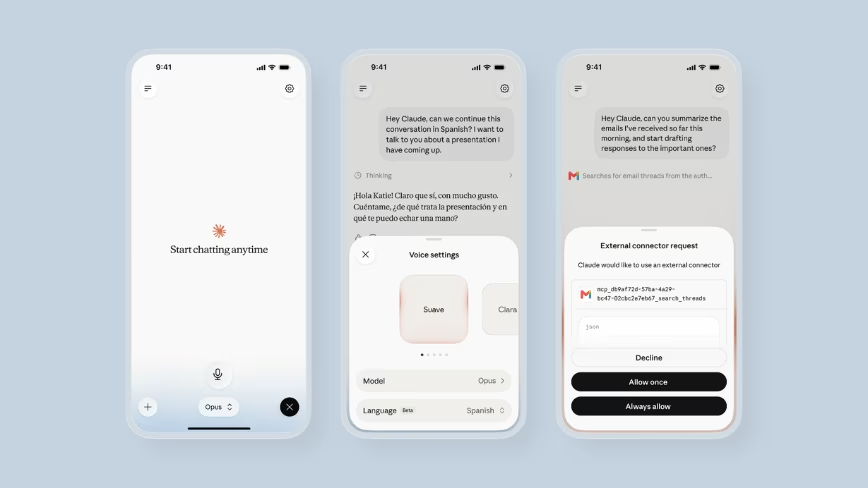
Anthropic has upgraded the voice mode for its AI assistant, Claude, to utilize its more powerful Opus and Sonnet models. Previously, the voice mode only operated on Haiku, Anthropic's fastest but least capable model. This enhancement aims to enable users to interact with Claude verbally and then observe the AI perform tasks. The company announced this development on Thursday, marking a significant step in Claude's voice interaction capabilities. The voice mode was initially introduced last year, and its integration with the more advanced models signifies a shift towards more complex and practical applications. Users can now expect a more robust and responsive experience when engaging with Claude through voice commands. This move suggests Anthropic's strategic focus on making AI assistants more actionable and integrated into daily workflows. The upgrade is expected to improve Claude's ability to understand and execute a wider range of user requests.
Anthropic's strategic decision to integrate its most capable models, Opus and Sonnet, into Claude's voice mode signals a market shift towards AI assistants that are not only conversational but also demonstrably actionable. By prioritizing task execution over mere natural language imitation, Anthropic is positioning Claude to compete in a landscape where tangible utility and efficiency are increasingly valued. This approach anticipates a future where AI agents are seamlessly embedded into productivity workflows, moving beyond simple information retrieval to active task management. The challenge ahead lies in balancing the computational demands of advanced models with the real-time responsiveness required for voice interaction, while also ensuring robust data privacy and security measures as AI becomes more integrated into personal and professional lives.
AI-generated to prompt reflection — not editorial opinion, not advice, not a statement of fact. How this works.