Ants' Division of Labor Secrets Revealed by Neuropeptide Evolution
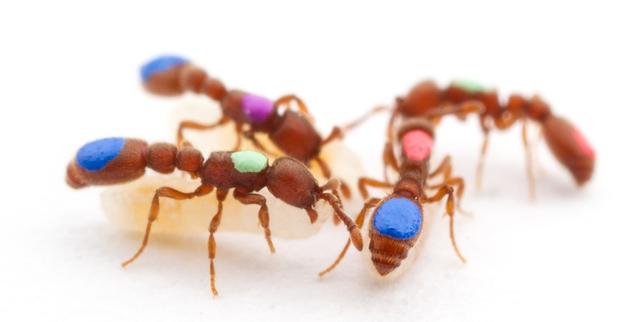
An American research team has uncovered how the evolution of two neuropeptides in the brains of ants leads to a transformation in their roles over time. Specifically, this evolutionary process shifts ants from performing tasks as "nurses" to becoming "foragers." This groundbreaking study sheds light on the intricate biological mechanisms that govern the complex social structures and specialized labor within ant colonies. The research highlights how changes in neurochemistry can directly impact behavior and contribute to the overall efficiency and survival of the insect society. Understanding these transformations offers valuable insights into the principles of social organization and behavioral plasticity in animal populations. The findings could have broader implications for fields ranging from evolutionary biology to artificial intelligence, particularly in understanding decentralized systems and task allocation.
This research illuminates the evolutionary pathways that shape complex social behaviors, such as the division of labor in ant colonies. By identifying the role of specific neuropeptides in transitioning ants from nurse to forager roles, the study provides a biological basis for observed behavioral shifts. This mechanistic understanding allows for a de-emphasis on anthropomorphic interpretations and focuses on the underlying neurochemical drivers. Examining such systems offers insights into how decentralized networks can efficiently allocate tasks, a principle relevant to both biological evolution and the design of future AI-driven systems. The long-term implications may involve understanding how environmental pressures drive such neurochemical and behavioral adaptations, potentially informing strategies for managing complex systems in changing ecological or technological landscapes.
AI-generated to prompt reflection — not editorial opinion, not advice, not a statement of fact. How this works.