Aosheng Founder on Exoskeletons: Redefining Human-Machine Interaction for Outdoor Adventures
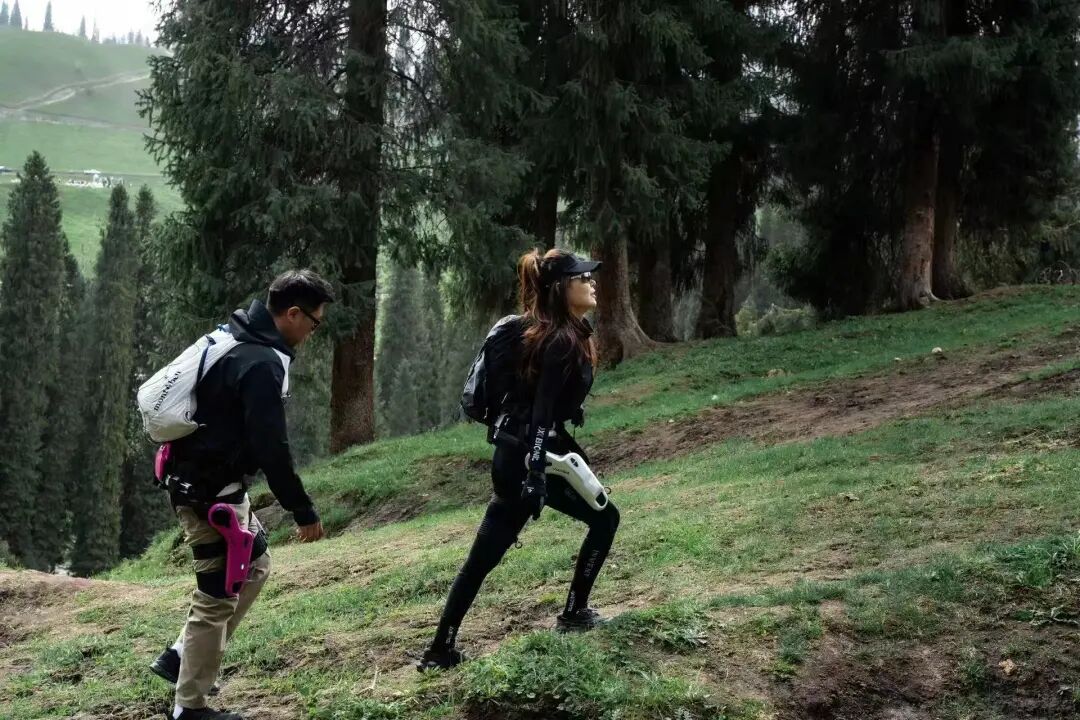
Aosheng, a Shanghai-based company founded in 2018, is bringing exoskeleton technology, previously seen in science fiction and industrial applications, to the consumer market for outdoor enthusiasts. Their VIATRIX powered exoskeleton robot was recently showcased at an event in Yangcheng Lake Peninsula Resort, where participants wearing the suits experienced a lighter, more effortless 6-kilometer hike. This technology learns a user's walking patterns and provides assistance, making strenuous activity feel like a casual stroll. Aosheng's journey began with R&D in medical rehabilitation exoskeletons, quickly expanding into industrial uses for logistics, emergency services, and power inspections, with a global presence in 25 countries.
Recognizing the potential for consumer applications as lightweighting technology matured, Aosheng launched its consumer brand VIATRIX in 2025. The VIATRIX exoskeleton has received accolades such as the CES 2026 Innovation Award and a silver medal at the 10th China Design Intelligence Award for its unique Float360 floating hip joint and AI motion deployment. Founder Xu Zhenhua emphasizes a dual-drive strategy, with industrial applications providing a foundation and consumer products driving growth. He notes that the primary consumer interest comes from individuals with average fitness levels seeking to explore the outdoors more comfortably, particularly men aged 30-50.
To address limitations in current designs, such as bulkiness and aesthetic appeal, Aosheng is investing in material science and system design to create lighter, more visually appealing exoskeletons. The integration of AI is crucial for successful outdoor adoption, enabling real-time learning and adaptation to individual gaits and varied terrains, unlike earlier models that relied solely on pre-programmed movements. Aosheng is building a 'tech + cultural tourism' ecosystem, establishing 20 collaboration points across China where users can experience the exoskeletons through rental services, gather feedback, and inform product development. This model aims to reduce purchase hesitation and create a positive feedback loop for product iteration. Aosheng also collaborates with established outdoor brands like Haglöfs to better understand user needs and market scenarios. Xu Zhenhua clarifies that exoskeletons are intended to augment human capabilities, not replace them, by extending endurance and making strenuous movements more efficient, rather than making decisions for the user. The company also exercises caution, advising against use for individuals with specific medical conditions like paralysis or stroke, and requiring pre-screening for elderly users.
The integration of advanced exoskeleton technology into consumer outdoor gear represents a significant shift in how humans interact with their physical environment and technology. This development, moving from industrial and medical applications to recreational use, highlights a growing trend towards human augmentation. The company's strategy of building an ecosystem through cultural tourism partnerships and collaborations with established outdoor brands suggests a sophisticated approach to market penetration and user adoption. This model not only facilitates product trials but also generates valuable real-world data for iterative improvement, a critical factor in nascent technology markets. The emphasis on AI-driven adaptive assistance, rather than pre-programmed actions, addresses a key limitation of earlier exoskeleton designs, promising a more intuitive and personalized user experience. As this technology evolves, it prompts a re-evaluation of human physical limitations and the definition of 'natural' physical activity, potentially reshaping future recreational and even everyday mobility paradigms. The careful distinction between consumer and medical-grade devices, along with pre-use screening, demonstrates an awareness of the technology's boundaries and potential risks, a responsible approach in a rapidly advancing field.
AI-generated to prompt reflection — not editorial opinion, not advice, not a statement of fact. How this works.