Apollo 11: How a broken switch and a pen saved astronauts from being stranded on the Moon
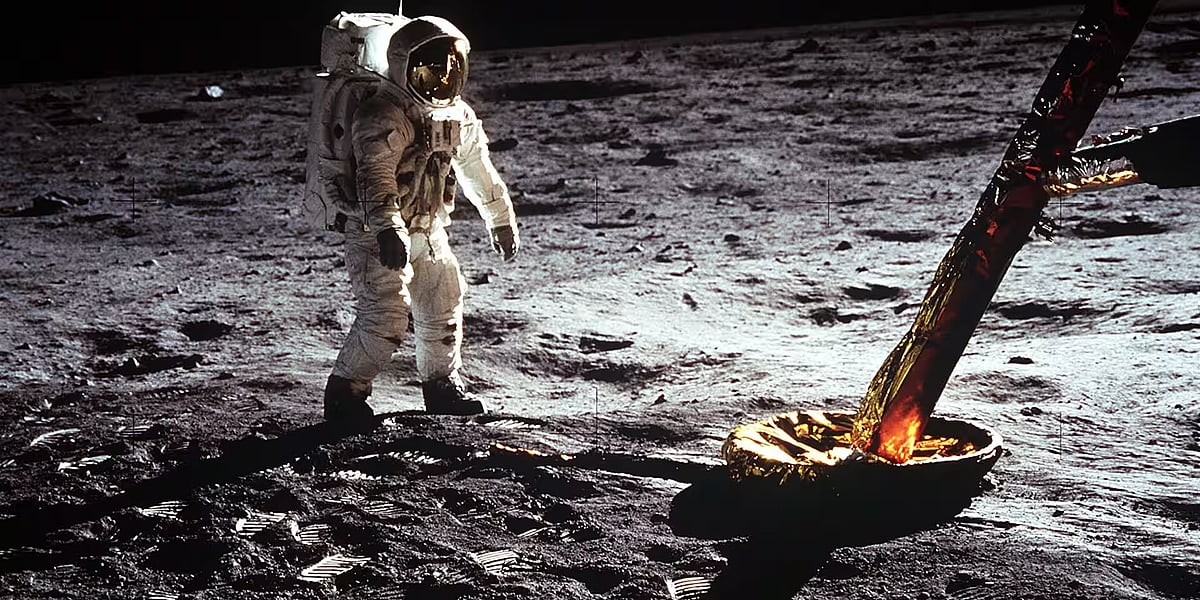
Decades after the historic Apollo 11 mission, new details have emerged about the critical moments that nearly stranded astronauts Neil Armstrong and Buzz Aldrin on the Moon. During the lunar module 'Eagle's' descent, a mysterious '1202' computer alarm indicated an overload, raising doubts about continuing the mission. Mission Control, led by flight director Gene Kranz, had only seconds to decide whether to proceed, relying on simulations that suggested a safe landing was possible despite such alarms. Simultaneously, radio communication between the lunar module and Mission Control in Houston was repeatedly lost, creating a high-stakes environment where decisions had to be made with incomplete information. As the Eagle approached the lunar surface, Armstrong manually took control to avoid a rocky landing area, with Mission Control announcing dwindling fuel reserves of '60 seconds' and then '30 seconds'—the critical window before a return to orbit would be impossible. Despite these challenges, Armstrong successfully landed the Eagle, famously declaring, 'Houston, Tranquility Base here. The Eagle has landed.'
The Apollo 11 mission's near-disasters highlight the inherent risks of pioneering space exploration and the critical role of human ingenuity under extreme pressure. The reliance on simulations and rapid decision-making by engineers, alongside Armstrong's manual intervention, underscores the dynamic interplay between automated systems and human oversight. The revelation of a contingency speech prepared for President Nixon, should the astronauts have been stranded, illustrates the profound geopolitical stakes involved and the extensive planning for catastrophic failure. Furthermore, the story of the broken circuit breaker switch and its ingenious repair with a felt-tip pen demonstrates how simple, improvised solutions can avert mission-ending crises, a testament to the resourcefulness of the astronauts and ground crew in the face of unforeseen technical challenges. This narrative offers a valuable perspective on the fragility of complex technological endeavors and the critical importance of adaptability and resilience in achieving ambitious goals.
AI-generated to prompt reflection — not editorial opinion, not advice, not a statement of fact. How this works.