AquaRio's Shark Ritinha 'Predicts' Argentina's World Cup Final Victory
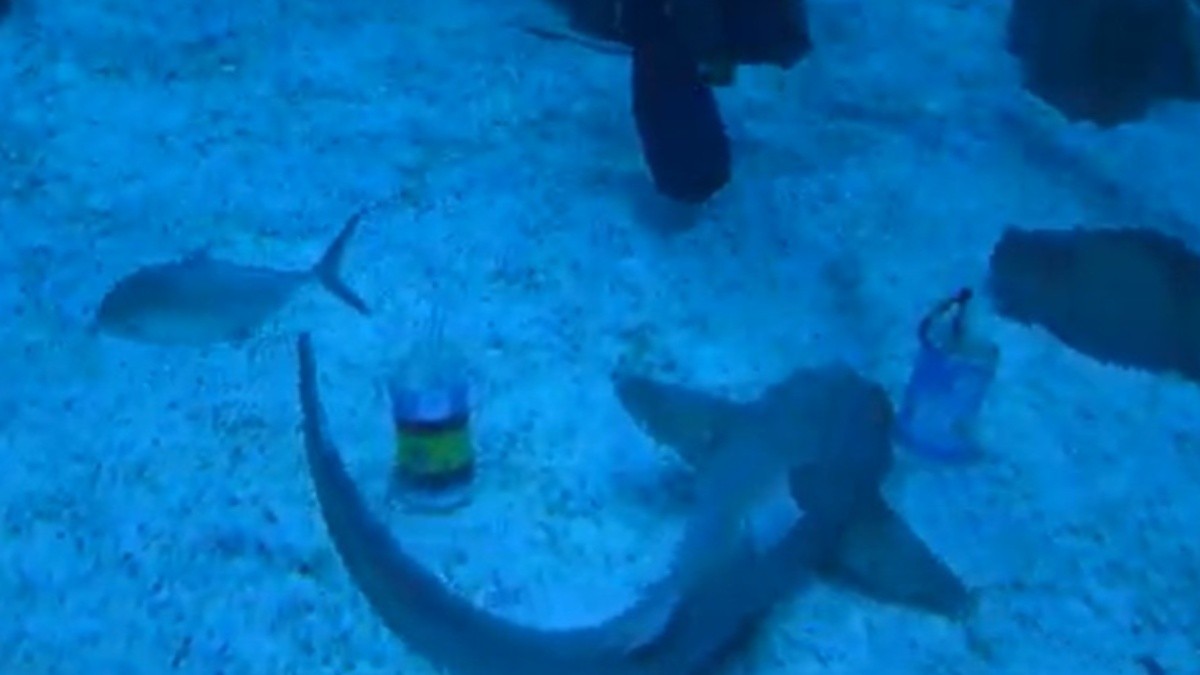
Ritinha, a shark residing in AquaRio's Great Oceanic Tank, has made her 'prediction' for the World Cup final. During an environmental enrichment activity conducted by the marine aquarium's technical team, the animal interacted with the Argentinian flag while ignoring the Spanish one. The final match is scheduled for Sunday, December 19th, in the United States, featuring the national teams of Argentina and Spain. AquaRio stated that this event was inspired by the tradition of 'oracle animals' in major sporting competitions and is part of the tourist attraction's special programming during the World Cup. Beyond providing public interaction, the activity is a component of the environmental enrichment routine designed by the technical team. This routine aims to stimulate natural behaviors, engage various senses, and promote the well-being of animals under human care. AquaRio houses approximately 10,000 animals from around 350 species and actively engages in programs focused on biodiversity conservation, scientific research, and environmental education. Visitors can explore diverse aquatic ecosystems, including the Great Oceanic Tank, underwater tunnels, the Axolotl Kingdom, and other interactive experiences. The aquarium is located at Praça Muhammad Ali, s/nº – Gamboa, Rio de Janeiro (RJ), and operates daily from July 13th to August 2nd, between 9 AM and 6 PM, with the last entry at 5 PM. Further details and tickets are available on their website.
This event highlights the human tendency to anthropomorphize animal behavior and seek predictive insights from non-human sources, particularly during high-stakes events like the World Cup. AquaRio's initiative leverages this psychological phenomenon as an 'environmental enrichment' activity, aiming to stimulate natural behaviors while simultaneously engaging the public. While framed as a lighthearted prediction, it underscores how entertainment and educational institutions can intersect with cultural rituals and collective anticipation. The practice, while seemingly benign, prompts reflection on how such activities might influence public perception of animal intelligence and the role of scientific institutions in public discourse, especially concerning the future integration of AI in predictive analytics across various domains.
AI-generated to prompt reflection — not editorial opinion, not advice, not a statement of fact. How this works.