Aquatic Plant Overgrowth Transforms Dourados Lakes into Green Mats
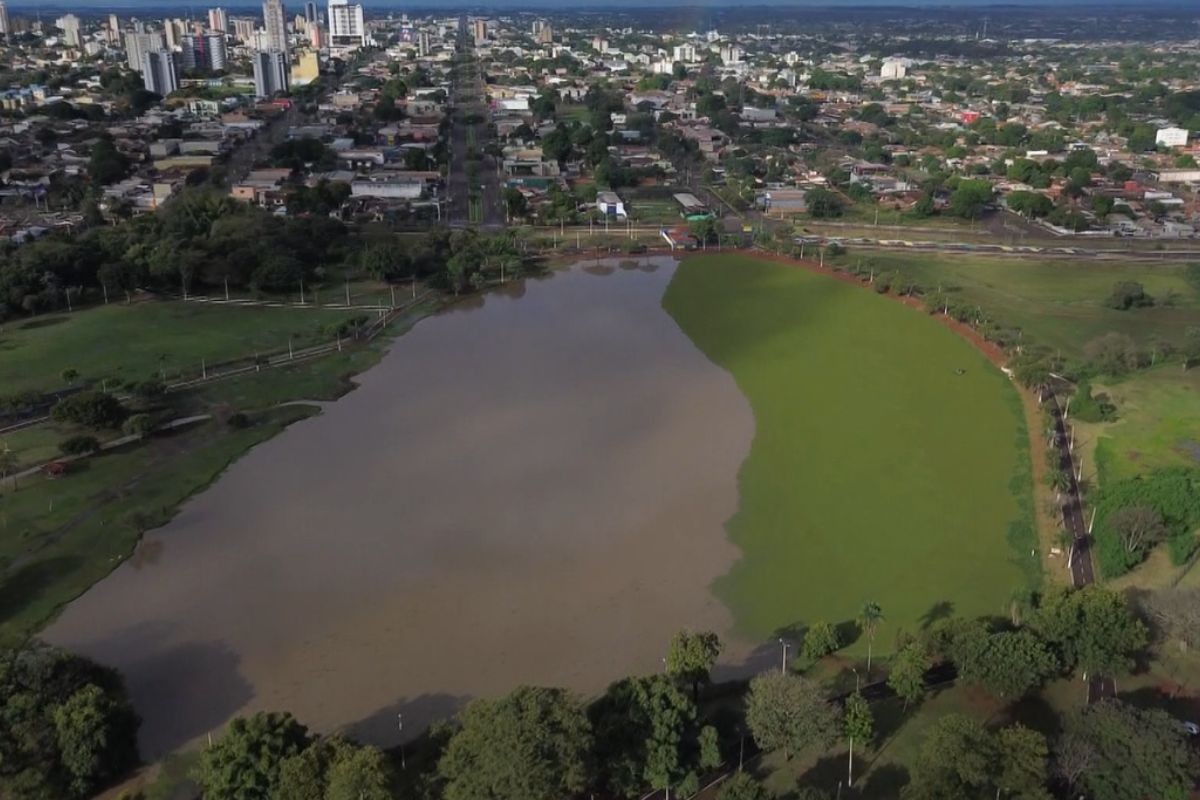
Two major lakes in Dourados, Mato Grosso do Sul (MS), have undergone a dramatic landscape change due to an excessive growth of aquatic plants, specifically the "orelha-de-onça" species. The water surfaces at Parque Antenor Martins and Parque Ambiental do Córrego Rêgo D'Água are now almost entirely covered by a thick green layer, obscuring the water beneath. The local municipality has launched a cleanup operation, mobilizing a task force to remove the vegetation. This effort, which began at the start of the month, is expected to take approximately 15 days to complete.
The cleanup involves manual tools along the lake edges and a boat for collecting plants from the water, with a backhoe assisting in their removal. According to Ângelo Augusto Gomes, the deputy secretary of Urban Services for the Dourados City Hall, recent heavy rainfall has significantly contributed to the plant's rapid proliferation. Despite its appearance, the "orelha-de-onça" plant is not toxic, does not contaminate the water, and poses no threat to fish populations. The primary goal of the operation is to manage the excessive vegetation and restore visibility to the water bodies.
This issue is not unprecedented, as the "orelha-de-onça" previously appeared in 2025 and resurfaced in early June. Images of the covered lakes circulated on social media, prompting residents to urge the city hall to take action. After addressing Parque Antenor Martins, the cleanup crews will move to the lake at Parque Ambiental do Córrego Rêgo D'Água. The dense vegetation also presents a potential safety hazard for park visitors, as it conceals the water's edge, making it difficult to distinguish between land and water without adequate signage.
The rapid proliferation of aquatic vegetation in Dourados' lakes highlights the ecological sensitivity of urban water bodies to environmental shifts, particularly increased rainfall and organic matter. While the municipality's swift response addresses immediate aesthetic and safety concerns, a long-term strategy may be necessary to mitigate recurring overgrowth. Understanding the specific nutrient inputs and hydrological conditions that favor "orelha-de-onça" is key to developing sustainable management practices. Future planning should consider integrated approaches, potentially involving natural bio-control agents or improved water management systems, to maintain ecological balance and reduce the need for frequent, resource-intensive manual interventions. This event underscores the broader challenge of managing urban ecosystems in the face of changing climate patterns and anthropogenic influences.
AI-generated to prompt reflection — not editorial opinion, not advice, not a statement of fact. How this works.